
Last updated November 24, 2026
 Sweep & inspection
 Caps & crowns
 Flue relining
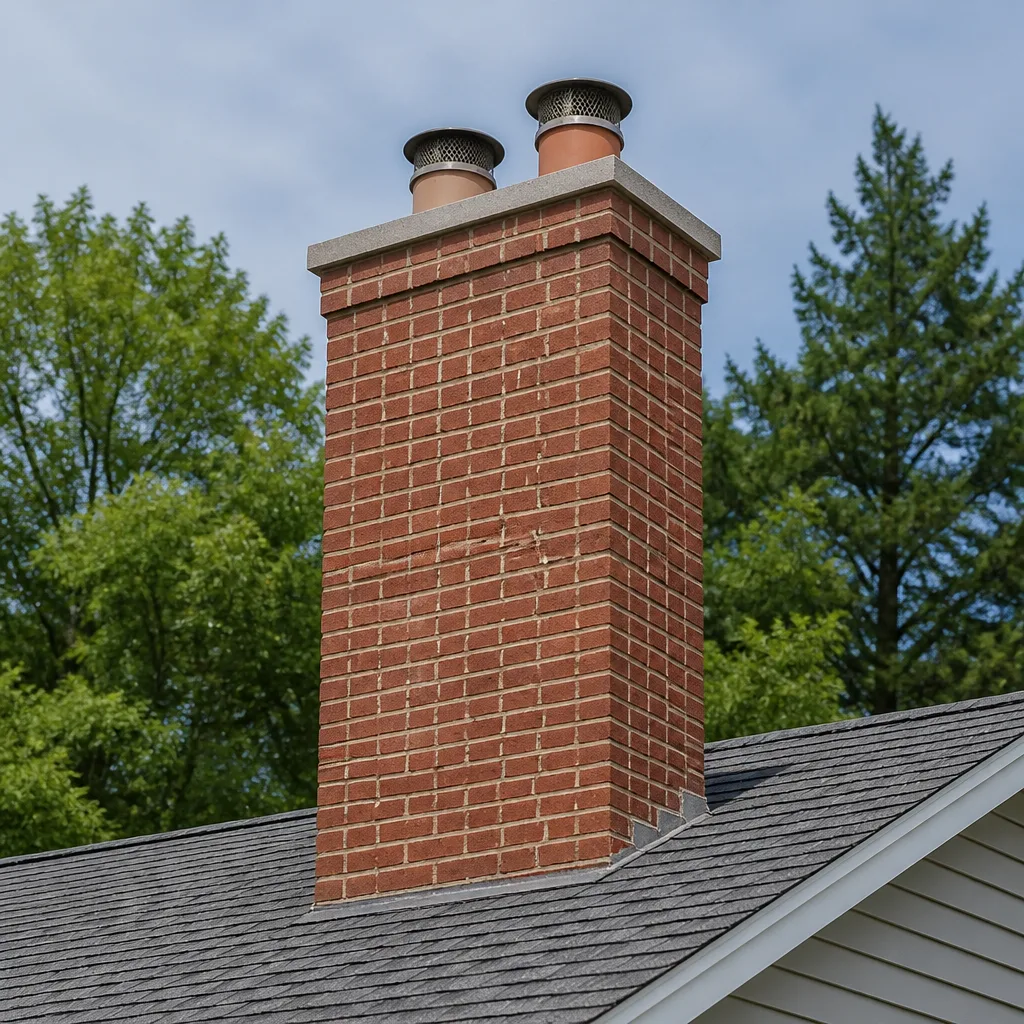 Masonry repair
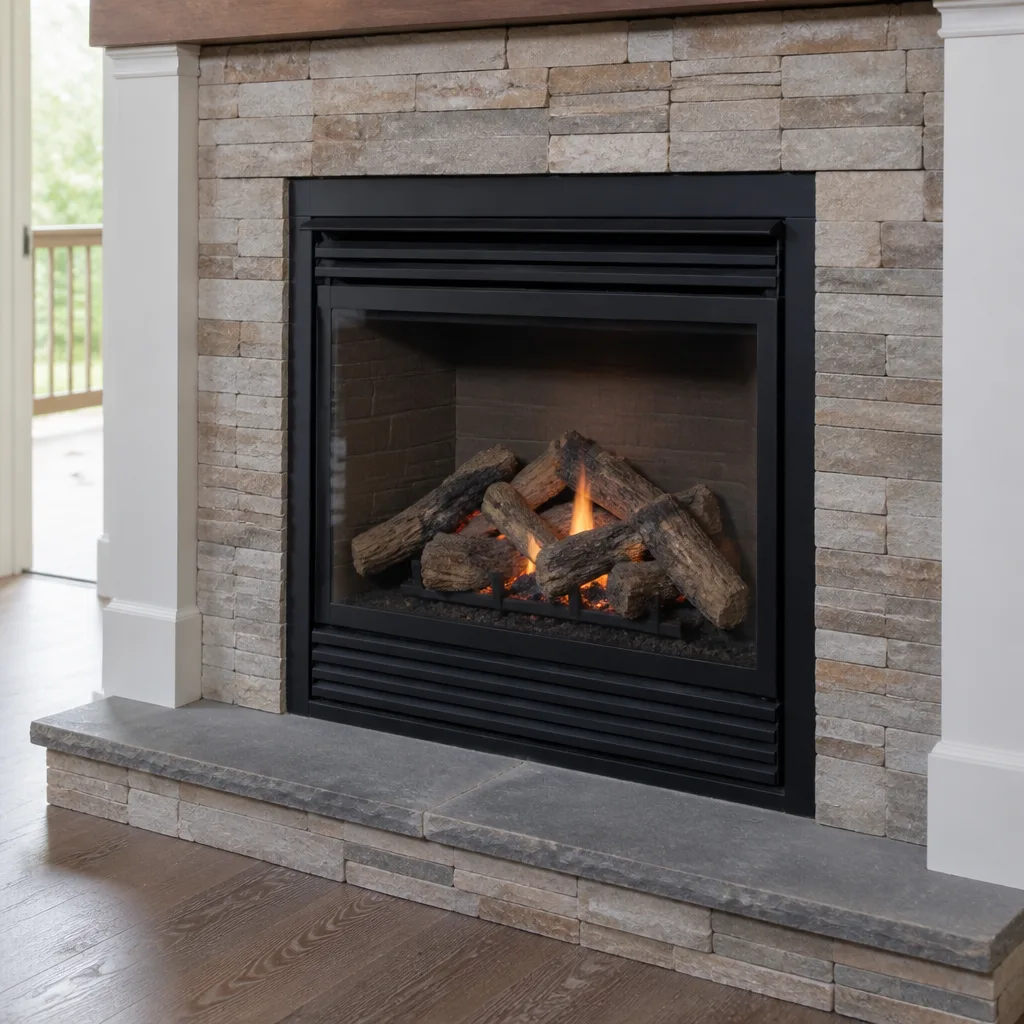 Gas fireplace service
Level 1 sweep and inspection to the NFPA 211 annual standard - flue, crown, cap, and flashing checked and photographed
Chimney sweep logs do not sweep chimneys. They loosen some creosote - which then falls where a brush and vacuum still have to collect it.
Seasonal Chimney Cleaning Care for Huntington Beach: Year-Round Homeowner’s Guide
Most chimney care advice you’ll find online was written for a place with four real seasons, which is exactly why it fits Huntington Beach so poorly. There’s no long freeze to worry about and no spring thaw that resets everything. What we have instead is a short, intense fire-use window from roughly November through February, followed by eight months of mild, damp and sunny weather that quietly works on the outside of a chimney while the inside sits idle. The repairs that cost the most are almost always the ones that built up during the off-season, not during the fires. This guide maps chimney care to the weather Huntington Beach actually gets, month by month, so you can schedule the right task at the right time instead of following a template built for Minnesota.
Styles & brands we work with
- Sweep & inspection
- Caps & crowns
- Flue relining
- Masonry repair
- Gas fireplace service
Quick Answer
In Huntington Beach, the best time to schedule your annual chimney sweep and inspection is right after your last fire of the season, usually late February or early March, not in the fall. Damp, inactive months like June Gloom do the most damage to caps, crowns and mortar, so the cleaning and moisture protection you do in spring and early summer is what carries the chimney safely into the next fire season.
Table of Contents
- Why Huntington Beach Chimneys Age Differently
- Why Post-Season Care Beats Pre-Season Prep
- Your Month-by-Month Chimney Calendar
- June Gloom and Moisture Intrusion
- Off-Season Cap and Crown Maintenance
- When to Schedule Your Annual Sweep
- What an Inspection Should Catch
- Common Mistakes to Avoid
- When to Call a Professional
- Frequently Asked Questions
Why Huntington Beach Chimneys Age Differently
Chimney problems in most of the country are driven by cold. Water gets into masonry, freezes, expands and cracks the brick. Huntington Beach doesn’t hand us that problem. What we get instead is a long mild stretch where the chimney is warm and dry, then damp, then warm again, repeated for most of the year. That cycle is gentler than a freeze, but it never fully stops, so moisture has months of quiet opportunity to work its way into the parts of the system you can’t see from the ground.
There’s also the fire-use pattern itself. A Huntington Beach household might burn steadily for a few winter weeks and then not at all for months. That on-and-off use is harder on a chimney than steady use in some ways, because the flue swings between hot and cold and dries out slowly. Creosote that forms during the burn season sits in the flue through the off-season, absorbing whatever humidity the air carries. When the next fire season starts, some of that residue has had months to settle in and harden.
What this means practically is that you can’t treat chimney care as a once-a-year checkbox. The Huntington Beach climate gives you two jobs in one year: cleaning out the fire season that just ended, and protecting the system through the months when nothing is burning. The rest of this guide breaks both down by month, but they run on the same idea. The condition of your cap and crown going into the off-season decides what shape your chimney is in by November.
Why Post-Season Care Beats Pre-Season Prep
Here’s the part that surprises people. Standard advice says to get your chimney swept before the first fire of the year, in the fall. In a cold climate that makes sense, because the fire season follows right on the heels of the sweep. In Huntington Beach, a fall sweep means the creosote from last season has already sat in the flue through eight months of damp, sunny, mild weather, and you’re cleaning it out only at the last possible moment. The whole off-season of moisture exposure has already happened.
A better schedule puts the sweep and inspection right after your last fire in late February or early March. That way the creosote doesn’t linger all summer, and it lines up with the months when the outside of the chimney is about to face the most moisture. You’re doing the cleaning and the protective work in the same window, so the same visit answers everything.
The benefits of getting the timing right show up in a few places:
- You catch problems one season earlier. A crack found in March can be repaired before the damp months do the damage a fall schedule would miss entirely.
- Creosote doesn’t sit all summer. The residue from your last burn season is gone before the humid months begin.
- The flue is dry and clean going into the off-season. That’s the state where masonry and mortar age the least.
- You avoid the fall rush. Scheduling in spring means you’re not competing for an appointment when everyone finally picks up the phone before their first fire.
We’ve seen both schedules side by side. A Huntington Beach chimney that gets a spring sweep and off-season moisture protection usually enters fall in much better shape than one that spent the summer untouched and gets cleaned out in October. Both chimneys burn the same amount. The difference is which months the chimney spent dirty and damp.
If you’re not sure where your chimney stands, a chimney sweep at the end of the season tells you a lot more than one in the fall, because it’s the condition of the chimney after a full off-season that predicts your next winter.
Your Month-by-Month Chimney Calendar
This is the practical heart of the guide. Instead of mapping care to four seasons, we map it to the months Huntington Beach actually experiences, in the order they arrive. Not every home needs every task, but the rhythm holds for most.
- March: Sweep and inspect. The last fire is behind you. Get the flue cleaned and the whole system checked now, while the memory of the season is fresh and any issue found has months to be handled without pressure.
- April: Fix what the inspection found. Cracks, failed mortar, a damaged crown, a problem cap. Spring is the ideal time to schedule repair work, because the chimney is dry and the repair can be done before the damp season arrives.
- May: Confirm drainage and cap condition. The first wet weeks are coming. This is when you want a cap that fits properly and a crown that sheds water away from the flue.
- June through August: Watch, don’t burn much. The long dry summer is when an unused chimney is exposed to sun and heat. This is a good stretch to review the cap for light damage and keep an eye on the crown for hairline cracks.
- September: A short visual check. Before fire season, look at the cap and crown from the ground if safe, and confirm nothing has moved or cracked over the summer.
- October: Final prep. Test the damper, confirm the firebox is clear, and make sure the flue is still clean from your spring sweep.
- November through February: Burn season. Use the fireplace as intended. Keep an eye on how the fire draws and listen for changes.
Notice that the major tasks cluster in spring, not fall. That’s the whole point. A Huntington Beach homeowner who follows this calendar spends the damp months with a clean, protected chimney, then only needs a light visual check before the first fire. The homeowner who waits until October ends up trying to fix moisture damage that started in March.
If a task from earlier in the year was skipped, our technicians have up to 11 years of experience and can tell you from the inspection what actually needs doing now and what can safely wait.
June Gloom and Moisture Intrusion
The June Gloom marine layer is the single biggest chimney factor most Huntington Beach homeowners don’t think about. For several weeks each early summer, the coast sits under thick morning cloud with high humidity that doesn’t fully burn off until the afternoon. For a chimney that’s been sitting unused since February, that’s a long, steady dose of moisture hitting the exact parts that fail first: the crown, the cap, the mortar joints near the top, and any crack in the flue lining.
The danger isn’t a dramatic leak. It’s slow. Moisture works into a hairline crack in the crown, sits there through the damp weeks, then dries out when the afternoons warm up, then comes back again in the evening dew. That wet-dry cycle repeats for weeks, and each one opens the crack a little more. By the time the next June Gloom arrives, the crown may have a crack wide enough to let water run down the outside of the flue.
There’s also the flue itself. Water that gets past a failed cap or crown can find its way into the flue lining, and if the lining is cracked or aged, that moisture reaches the masonry around it. A chimney that leaks in July is often a chimney that had a small cap problem back in March. The moisture doesn’t need a storm to cause trouble, just the humid air and a way in.
What you can do without going on the roof:
- Check from the ground whether your cap is intact and fitted correctly. A cap that’s rusted through or knocked loose is the most common moisture entry point.
- Look for water stains on the ceiling or walls near the chimney breast after a damp morning.
- Watch for a musty smell in a room with a fireplace that hasn’t burned in months.
- Notice any white, chalky crust on the outside brick. That’s a sign moisture is moving through the masonry.
The one thing not to do is climb up and try to seal or patch the crown yourself. Height work on a chimney is genuinely dangerous, and a patch that traps moisture inside does more harm than the crack it covered. A proper fix uses materials designed for it. That’s where a chimney cap & crown service matters, because the cap and crown are the moisture defense for the whole system, and they should be inspected as part of the same job.
Off-Season Cap and Crown Maintenance
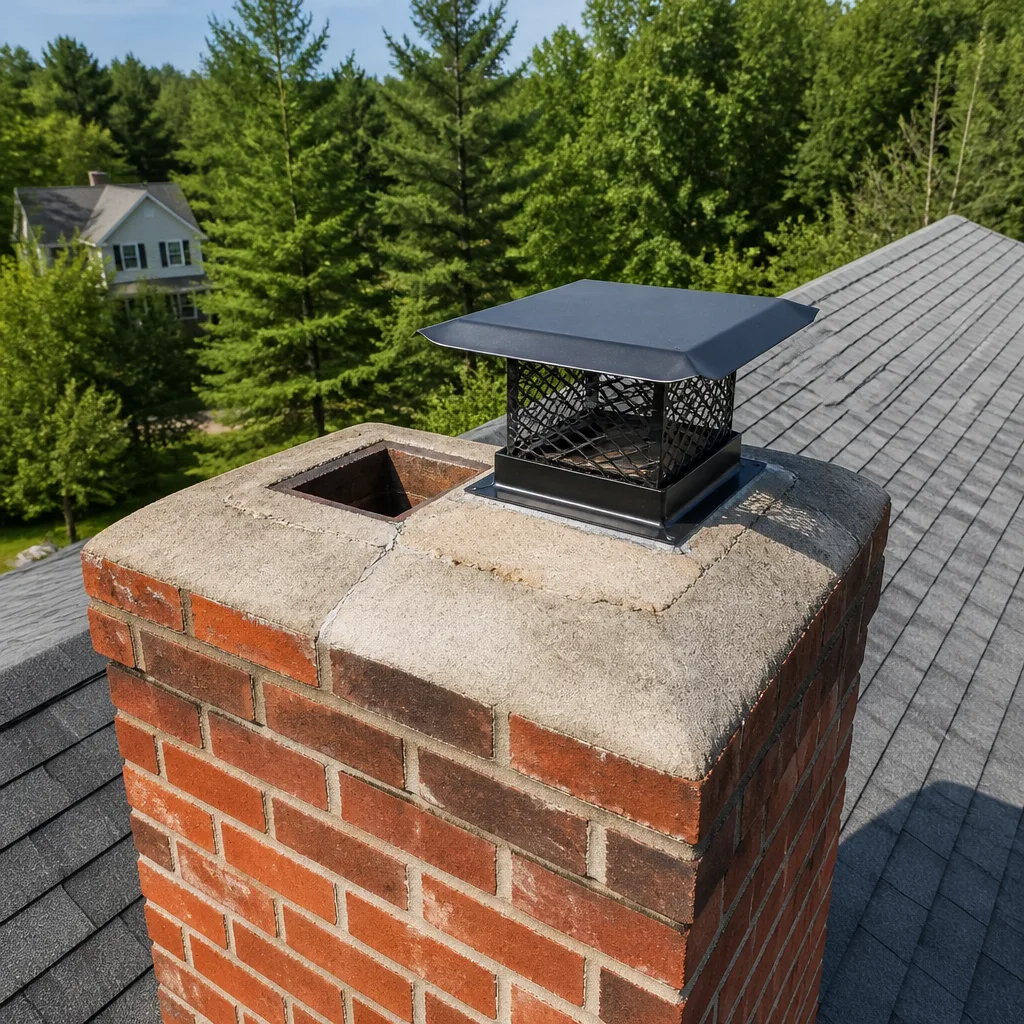
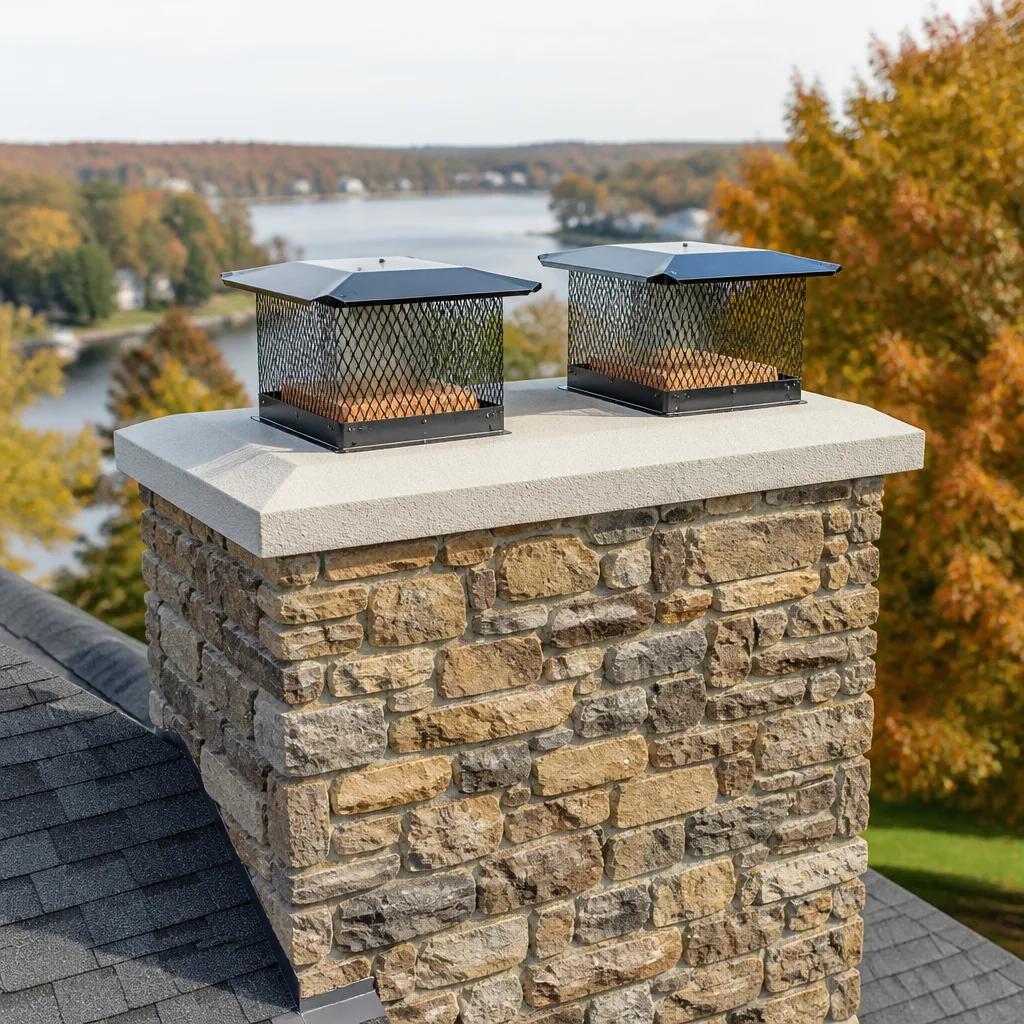
If there’s one part of your chimney that decides how long the whole system lasts, it’s the cap and crown. The cap keeps rain, animals and debris out of the flue. The crown is the concrete or masonry top that sheds water off the chimney itself. Both sit at the top, both take the full brunt of sun and moisture, and both are cheap to maintain when they’re fine and expensive to ignore when they fail.
The cap is a simple thing that fails in a few predictable ways. Screen mesh rusts through. A seam pulls loose. The whole cap gets knocked askew by wind or an animal. When any of that happens, water and debris get in, and if you don’t catch it, the flue lining underneath starts to suffer. In our experience, the off-season is the best time to catch a cap on its way out, because a small failure found in April is a quick fix, while the same failure found in October may have let months of moisture in.
The crown has a longer, slower failure. It’s a concrete or masonry surface exposed to the sun all summer and the damp all spring. Hairline cracks show up, and over years they widen. Once a crown stops shedding water the way it should, moisture gets into the top of the chimney and starts working on the flue from the outside in. Resurfacing a worn crown extends the life of the whole system by years, and it’s work most people postpone until a leak forces the issue. A crown that’s still sound in spring is worth keeping sound, and the fix is far less involved when it’s caught early.
We handle caps and crowns with components from Gelco and Famco, and we install them as part of the same service visit that diagnoses the problem, not as a referral to someone else. That matters here. A cap or crown that’s been flagged but not fixed is still letting moisture in, and the off-season is exactly when a gap between diagnosis and repair costs you the most.
Here’s the order we work in when moisture is a concern:
- Inspect the cap and crown in the same visit as the sweep. You learn the whole picture at once.
- Show you what we found. The inspection report is written, and if something needs repair, you get a quote you can act on, not a note to find another contractor.
- Replace or repair the failing part. A cap that’s done is replaced with a professional-grade one. A cracked crown gets resurfaced or rebuilt.
- Confirm the flue is protected before the damp season. Cap and crown together keep the moisture out, and both are handled in-house.
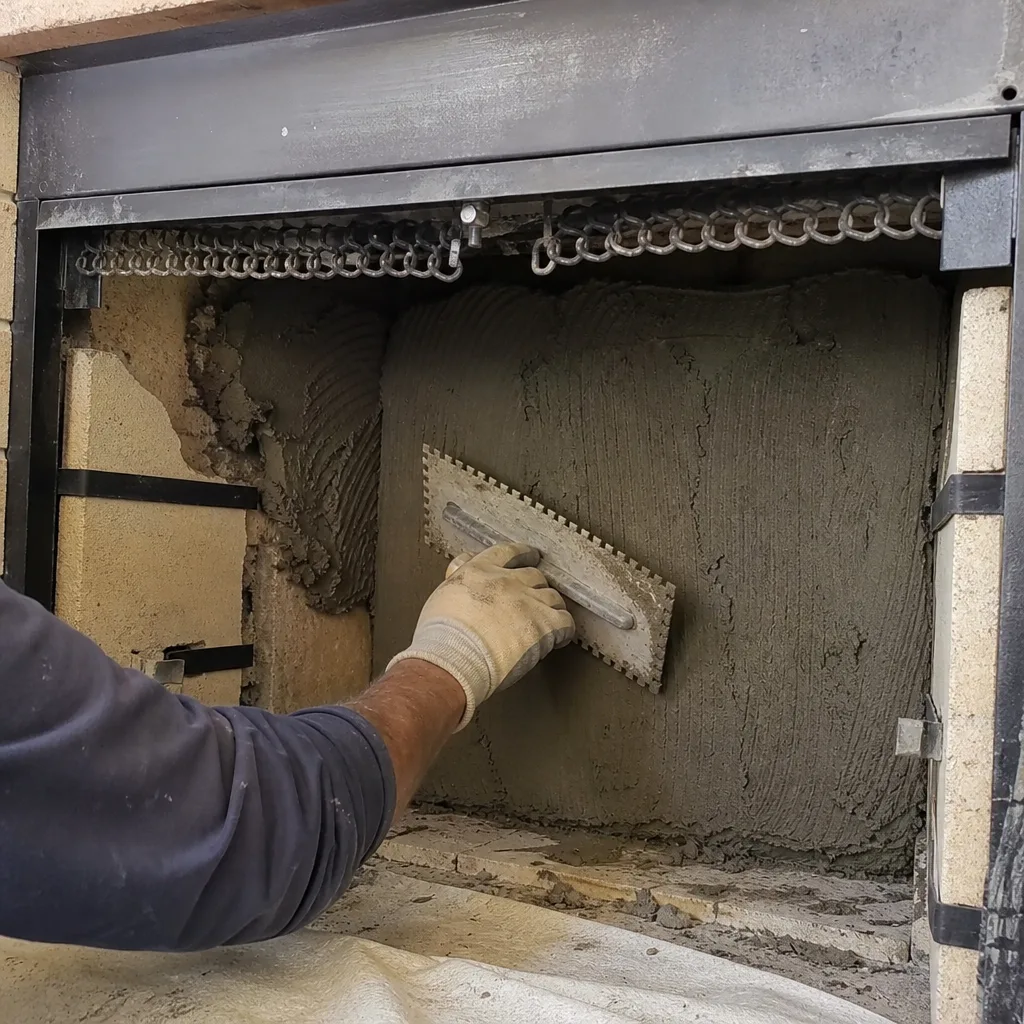
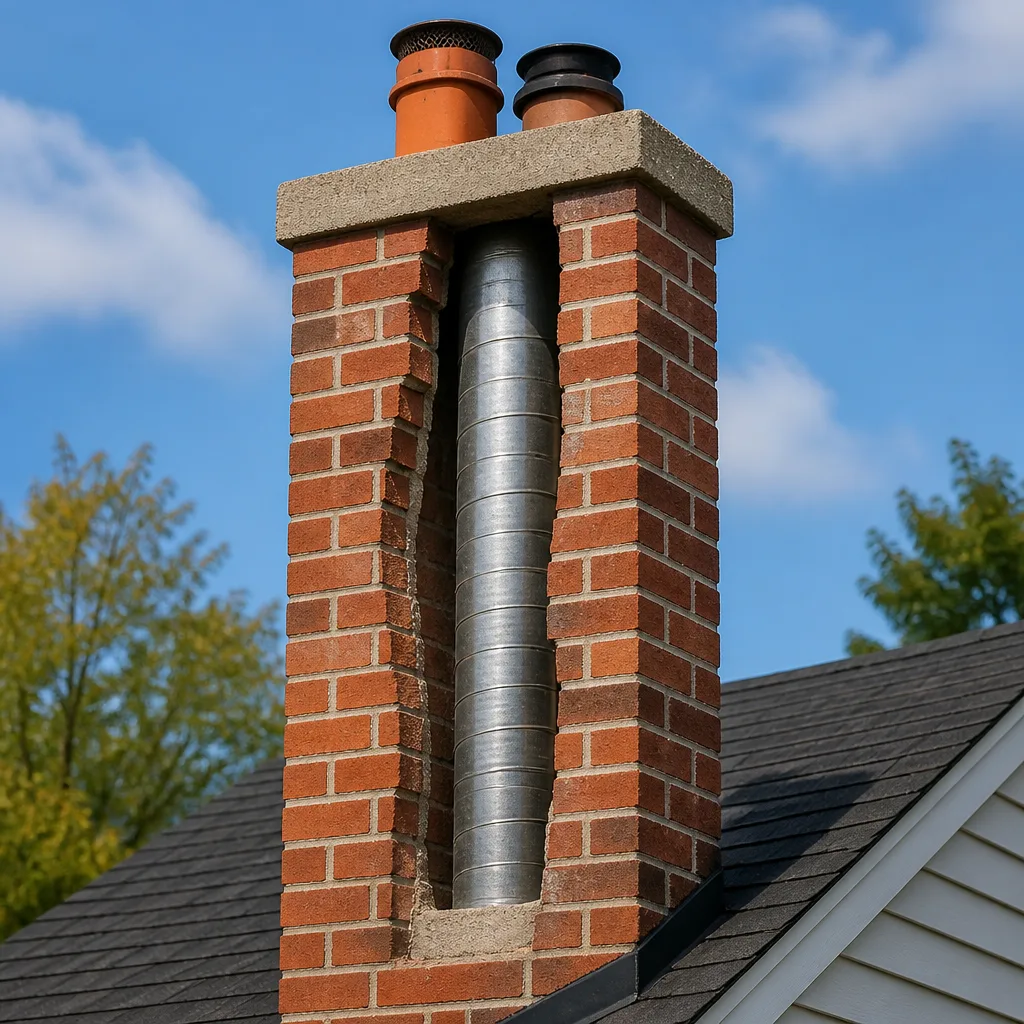
This is also the time to think about the lining. If the inspection turns up a cracked or worn flue, we use HeatShield ceramic resurfacing to restore it without tearing out the chimney, and DuraFlex liner systems when a full liner is the right fix. Both are professional-grade materials, and both are repairs a basic sweep company often can’t perform on its own.
When to Schedule Your Annual Sweep
Forget the calendar rule of thumb. The right time to sweep is measured from your last fire, not from a month on the wall. If your last fire was in February, your best sweep window is March or April. If you burn into March, sweep in April. The principle is simple: clean the flue as soon as it’s done for the season, before the creosote and residue settle in over the damp months.
How often to sweep depends on use. The usual guidance is an annual sweep for a regularly used fireplace, and more often if you burn a lot, burn unseasoned wood, or have a firebox that produces a lot of residue. A Huntington Beach home that burns a few cords between November and February should plan on a yearly sweep. A home that lights a fire a handful of times a year still benefits from an annual inspection, even if the flue doesn’t need a full cleaning.
- Burn frequently (several fires a week during the season): sweep every year, right after the season ends.
- Burn occasionally: annual inspection, and sweep when the inspection calls for it.
- Just bought the home: sweep and inspect before your first fire, regardless of the season, because you don’t know the chimney’s history.
- Got a repair recommendation from a home inspector or another sweep: have it looked at now, so the recommendation becomes a plan instead of a note.
One more thing many HVAC-adjacent services never mention: the sweep is the moment to see the whole chimney, not just the flue. A professional sweep inspects the firebox, damper, smoke chamber, cap and crown in the same visit, so you leave with a written picture of the full system. That’s what translates directly into a repair plan when something needs work, and it’s why we pair every sweep with an inspection. If you’re dealing with a fireplace that’s been giving you trouble, that inspection can also tell you whether you’re looking at a fireplace repair issue rather than a cleaning one.
What an Inspection Should Catch
A good chimney inspection is not a quick look down the flue. It’s a structured check of every part of the system, from the firebox to the top of the crown, and you should come away knowing what’s sound, what needs watching, and what needs repair. In Huntington Beach, the inspection matters more than usual because the off-season is when most problems develop. A sweep in March that finds a hairline crown crack saves the homeowner from a leak in July.
What a professional inspection covers:
- Firebox and damper: cracks, deterioration and whether the damper opens and closes correctly.
- Smoke chamber and flue: buildup, damage and the condition of the lining.
- Cap and crown: fit, condition and how well they shed water.
- Exterior masonry: mortar joints, flashing and signs of moisture movement.
- The report itself: written findings that translate into a repair quote if work is needed.
We do this with a camera and a written report, so you can see for yourself what’s going on in the flue, not just take our word for it. That’s deliberate. The thing homeowners most often worry about with chimney work is being told they need a big repair they can’t verify. The camera and report answer that, because you see the evidence. If something can safely wait, we say so, and you have the report to check against a second opinion if you want one.
What the inspection can lead to, when the findings justify it:
- A flue cleaning if there’s enough buildup to warrant it.
- A cap or crown replacement if the moisture protection has failed.
- Flue resurfacing with HeatShield if the lining is cracked but the chimney structure is otherwise sound.
- A DuraFlex liner installation if a full liner is the correct repair.
- Structural repair if the masonry around the flue has real damage.
The advantage of working with a company that covers the whole system is that steps two through five don’t get handed off. The inspection findings become a quote, and the quote gets scheduled. You’re not left holding a report and a list of contractors.
Common Mistakes to Avoid
Most of what goes wrong with Huntington Beach chimneys comes down to scheduling and small things that get put off. These are the ones we see most.
- Waiting until fall to sweep. A fall sweep cleans out creosote that sat through the whole damp season. Sweep after your last fire instead, so the flue is clean going into the off-season.
- Ignoring the cap and crown until a leak shows up. By the time you see water inside, moisture has been working for months. Check the cap and crown at the start of the off-season, not after the ceiling stains.
- Assuming mild weather means the chimney is fine. No winters here means less freeze damage, not no damage. Damp air and sun do their own slow work, and the result is often a crown crack in July.
- Putting off a repair a home inspector flagged. A written recommendation from an inspector or another sweep is a starting point, not a verdict. Have it looked at by a company that can actually do the repair, so the recommendation turns into a plan.
- Sealing a cracked crown with a patch. A surface patch on a crown can trap moisture inside and speed the damage up. The crown needs a proper repair, and the work happens at height, so it’s not a homeowner job.
- Skipping the inspection because the flue looks clean. The flue being clear doesn’t mean the cap, crown, mortar and flashing are sound. The inspection catches the parts you can’t see, which is exactly what the off-season exposes.
- Burning unseasoned or wet wood. Wet wood creates more residue and more moisture in the flue, and that residue then sits all off-season. Seasoned wood is easier on the whole system.
When to Call a Professional
There are moments when waiting costs more than calling. If you’ve had a repair recommendation from a home inspector or another sweep and want it verified and quoted, we handle that. If you see water stains near the chimney breast after a damp morning, or a musty smell in a room with an idle fireplace, that’s a sign moisture is getting in and worth a look. If your cap looks rusted, loose or missing, or your crown has visible cracks, those are the moisture-protection problems that get worse through the off-season. If it’s been more than a year since your last sweep, or if you’ve just moved in and don’t know the chimney’s history, schedule one. And if you’re about to burn for the first time in months and something feels off with how the fire draws, that’s worth checking before you light it.
Chimney Sweep Huntington Beach offers free estimates in Huntington Beach, and the estimate is set per job by the written quote. Call (855) 658-5323. We answer 24/7. Fast dispatch from 7am to 7pm, Sunday through Friday.
Frequently Asked Questions
Once a year for a regularly used fireplace is the standard, scheduled right after your last fire of the season rather than in the fall. Homes that burn heavily or use unseasoned wood may need more frequent sweeping, and every home benefits from an annual inspection even when the flue doesn’t need a full cleaning. Call (855) 658-5323 for an exact quote, estimates are free.
Late February through April, right after your fire-use window ends. In Huntington Beach that timing does double duty, because it cleans out the creosote before the damp months and lets any repair get handled before the moisture arrives. A fall sweep cleans the flue only after it’s spent a whole off-season exposed. Call (855) 658-5323 for an exact quote, estimates are free.
Yes, slowly. The marine layer brings weeks of high humidity that works into hairline cracks in the crown and mortar and around a failed cap, then dries out in the afternoon, then returns. That repeated wet-dry cycle widens small cracks over time. It’s not dramatic, but it’s exactly the kind of damage the off-season lets build. Call (855) 658-5323 for an exact quote, estimates are free.
Only if the inspection shows the existing lining is cracked, worn or otherwise unsafe, and you’ll see the evidence on camera before anything is recommended. We use HeatShield ceramic resurfacing when the flue can be restored without demolition, and DuraFlex liner systems when a full liner is the right repair. Nothing gets recommended without something you can see for yourself, and we say plainly when a repair can safely wait. Call (855) 658-5323 for an exact quote, estimates are free.
Creosote builds up in the flue, and moisture keeps working on the cap, crown and mortar through the damp months. The longer it goes, the more the small problems turn into repairs. None of it is an emergency on day one, which is exactly why it gets put off, but the off-season is when the cost of waiting adds up. Call (855) 658-5323 for an exact quote, estimates are free.
Often, yes, when the repair is straightforward and the right parts are on hand. We install and service caps and crowns using Gelco and Famco components as part of the same company that did the sweep, so a moisture problem found during the inspection can be quoted and scheduled without a handoff. Call (855) 658-5323 for an exact quote, estimates are free.
The Bottom Line
Huntington Beach doesn’t give you four seasons of chimney care, so don’t follow a four-season template. Your real calendar is built around a short fire season and a long off-season that quietly does the damage. Sweep and inspect right after your last fire, handle cap, crown and flue repairs in the spring, and watch the moisture through June Gloom. Do that and the chimney enters each fire season clean, protected and in good shape. Skip it and the repairs arrive on their own schedule. The whole system, from the firebox to the cap, is what we handle, and we do it as one company from inspection to repair. Call (855) 658-5323. We answer 24/7. Fast dispatch from 7am to 7pm, Sunday through Friday.
You can also start at our main Chimney Sweep Huntington Beach page to see the full range of what we cover and how a free estimate works.
Written by the team at Chimney Sweep Huntington Beach.
See the difference
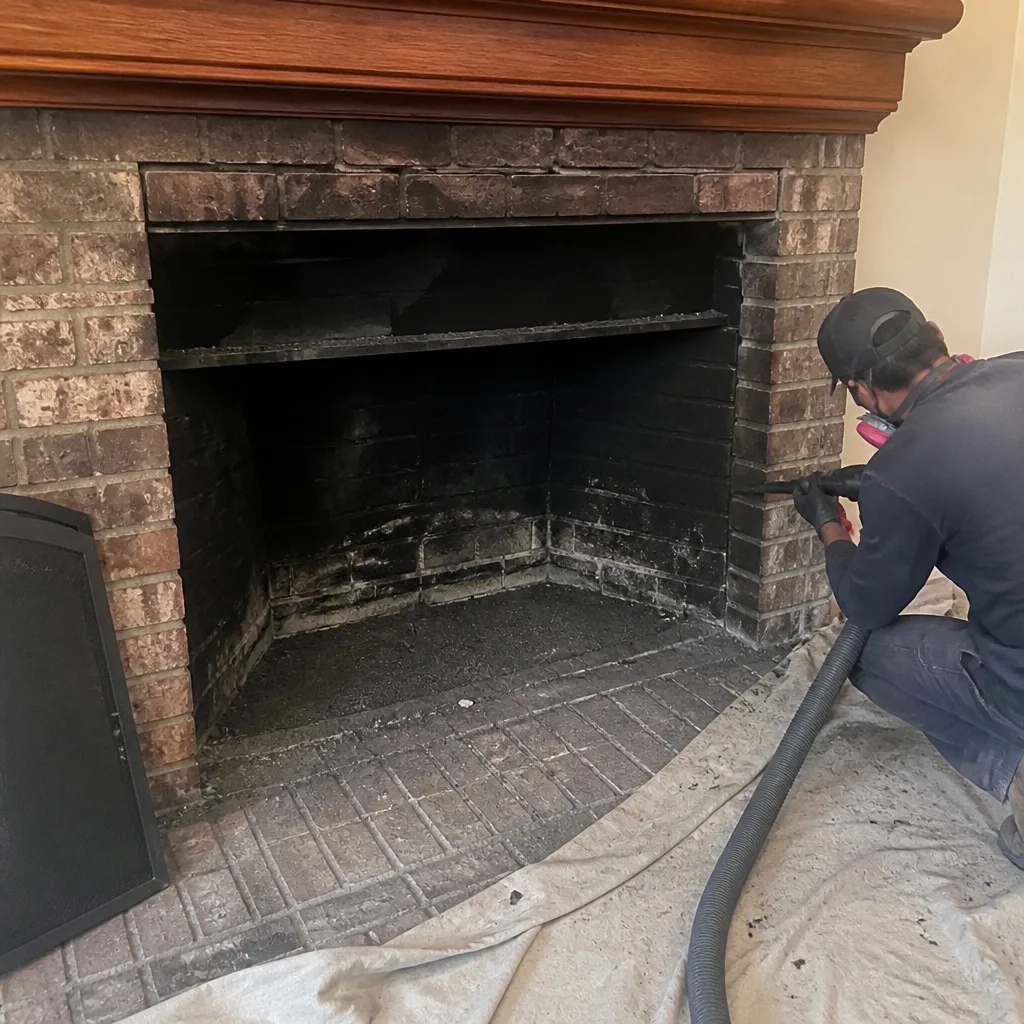 Before
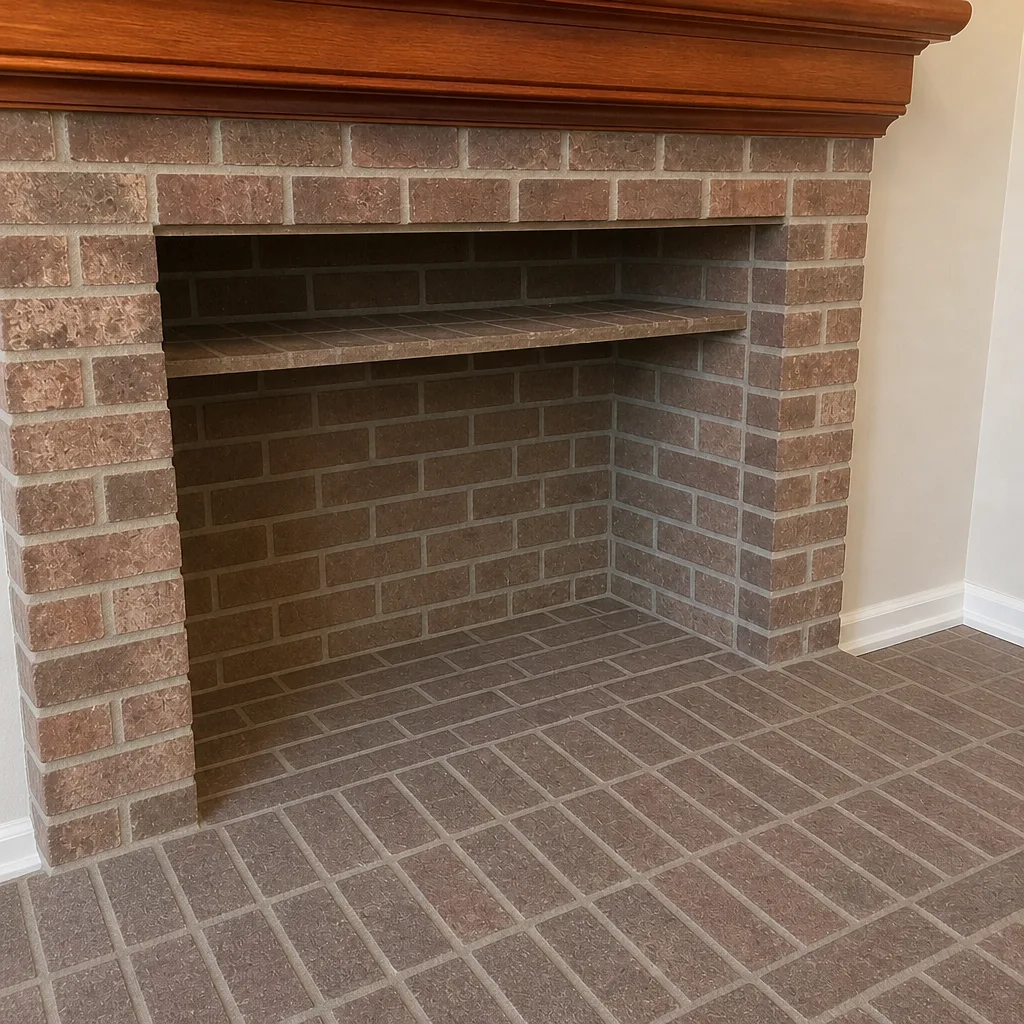 After
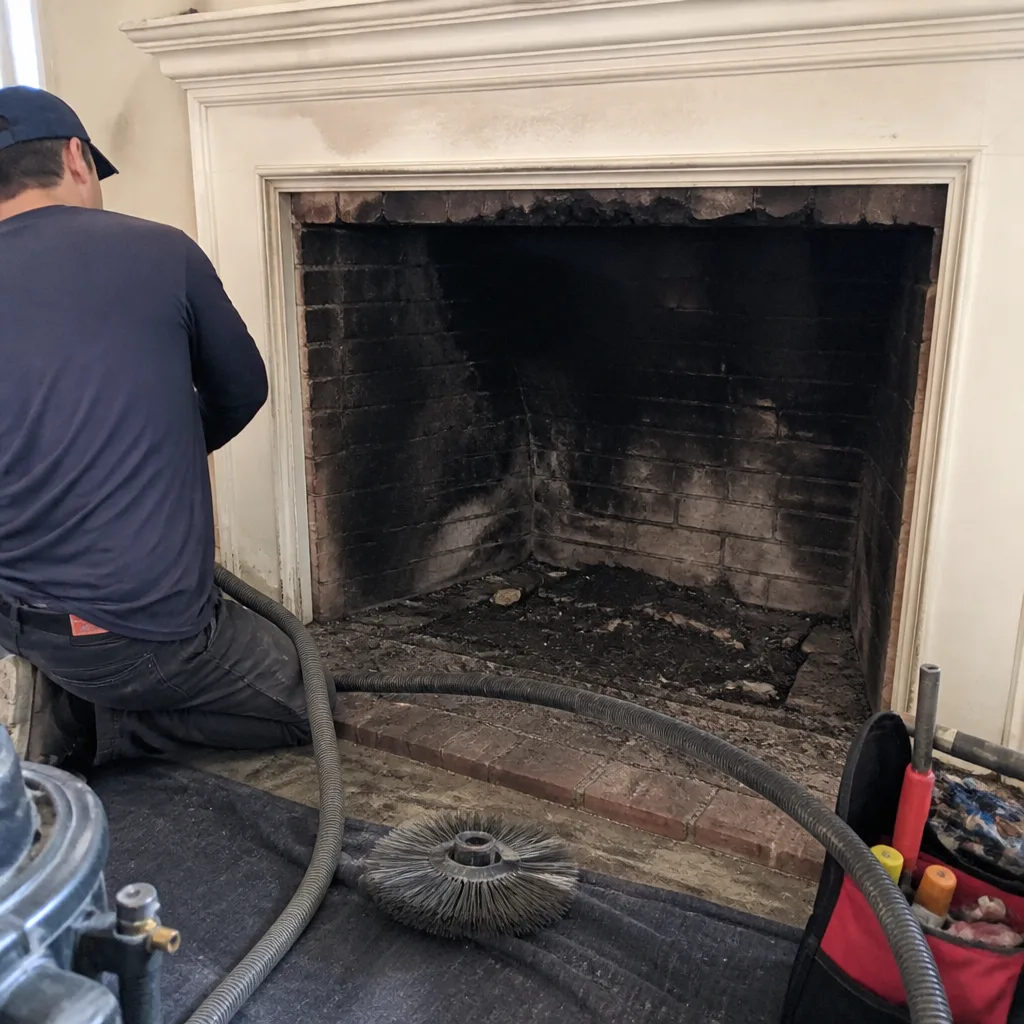 Before
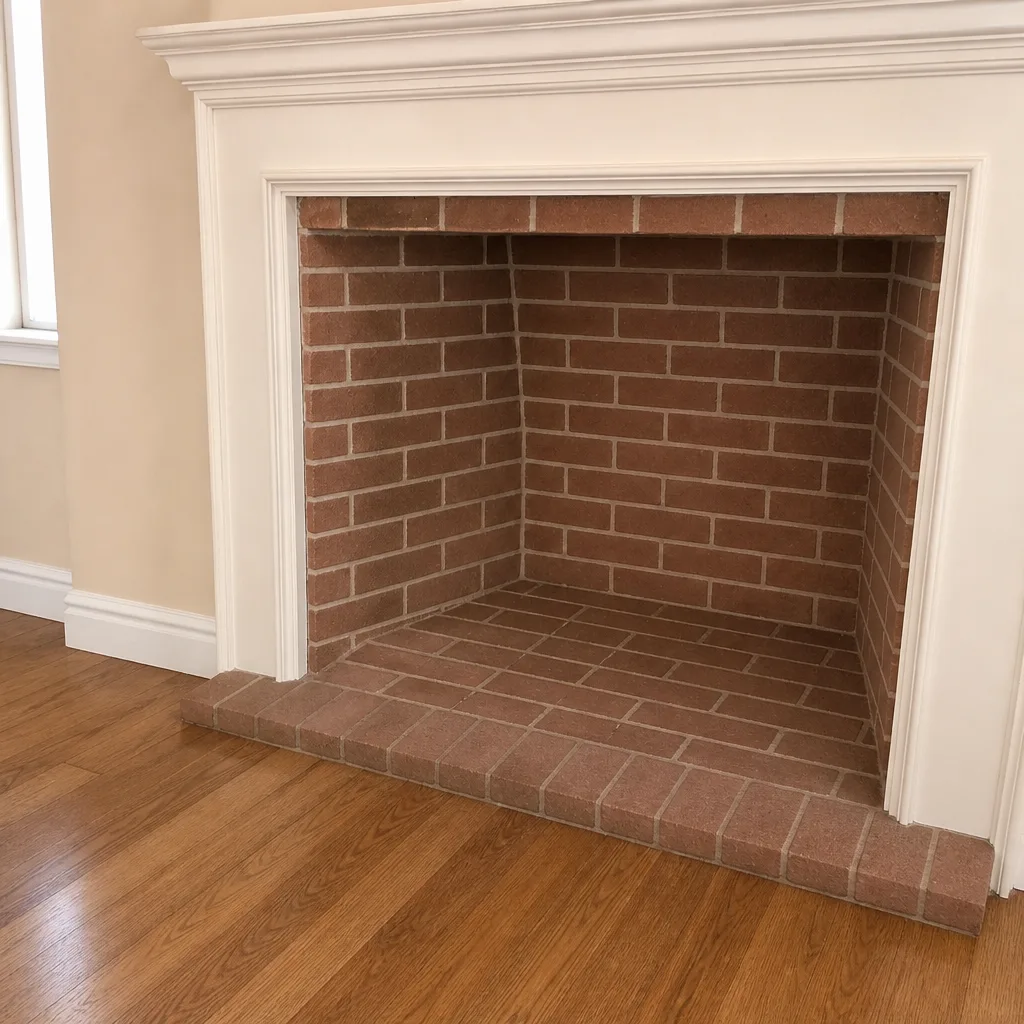 After
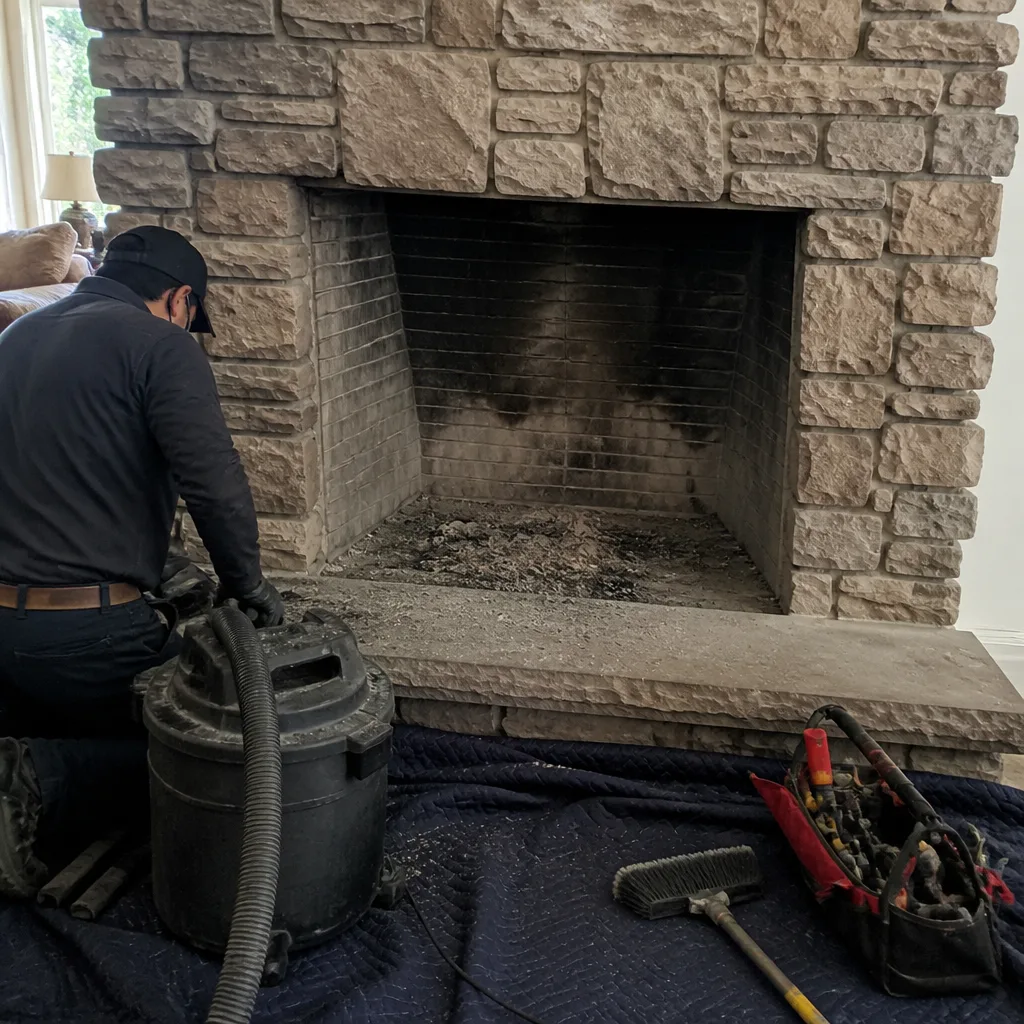 Before
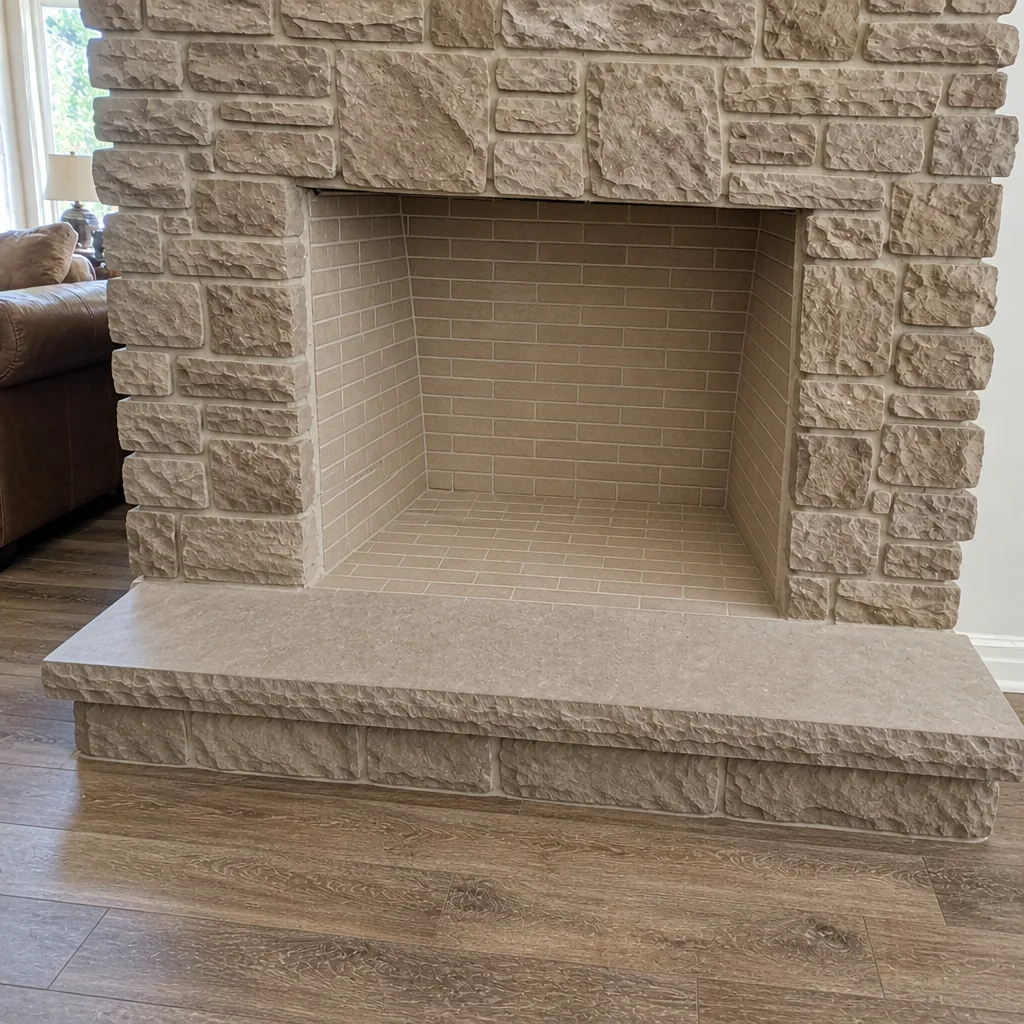 After