
Last updated November 24, 2026
 Sweep & inspection
 Caps & crowns
 Flue relining
 Masonry repair
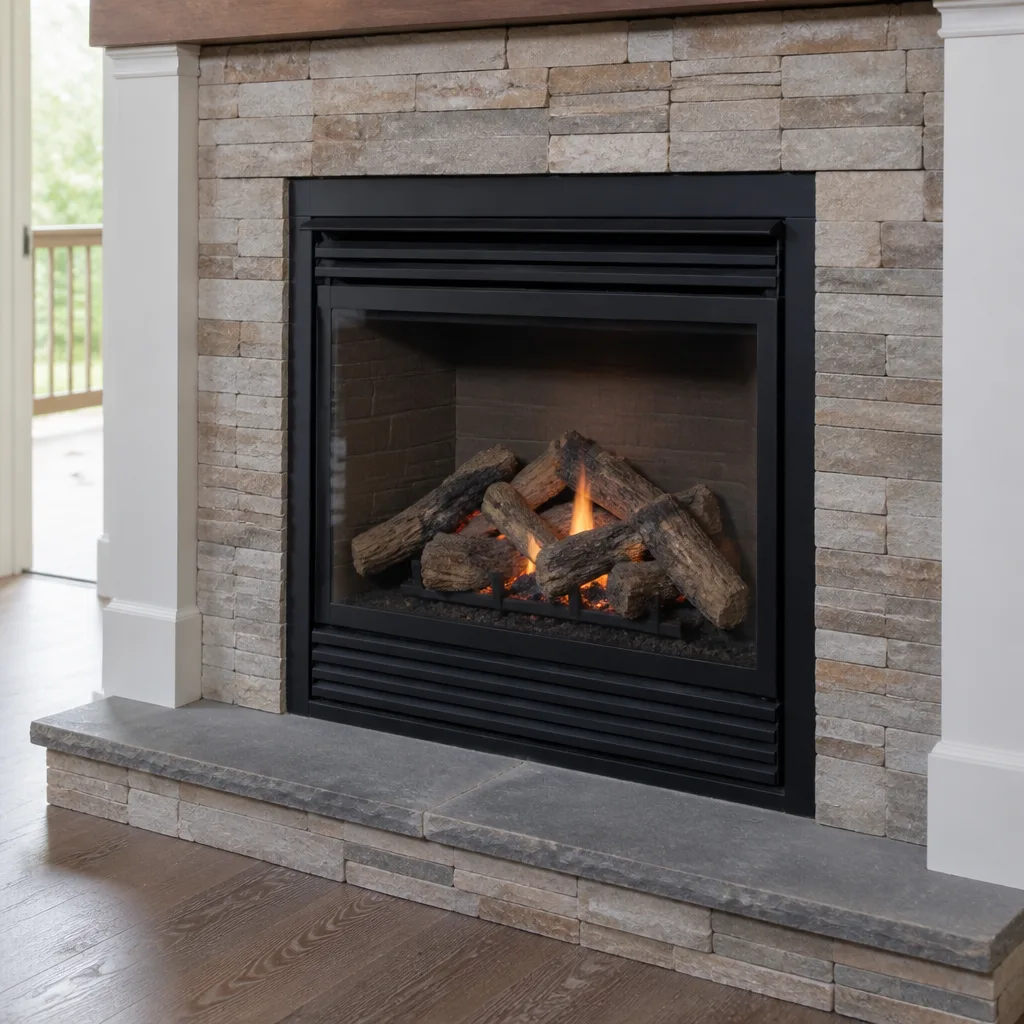 Gas fireplace service
Level 1 sweep and inspection to the NFPA 211 annual standard - flue, crown, cap, and flashing checked and photographed
Chimney sweep logs do not sweep chimneys. They loosen some creosote - which then falls where a brush and vacuum still have to collect it.
Chimney Cleaning Warning Signs: A Huntington Beach Homeowner’s Reference Guide
A white stain running down the outside of your chimney isn’t weathering. It’s efflorescence, and it means water is moving through your masonry and leaching minerals out as it goes. In Huntington Beach’s salt-air environment, that process runs faster than it would a few miles inland, which makes it one of the most ignored early warnings a chimney can give. Most warning-sign lists focus on obvious failures like smoke rolling back into the room, but the signs that actually save homeowners money show up long before anything dramatic happens. This guide covers the signals Huntington Beach homeowners most commonly overlook, how to read them on your own, and how to tell which ones mean “schedule a visit soon” versus “don’t light another fire until someone looks at this.”
Quick Answer
Chimney cleaning warning signs in Huntington Beach include white efflorescence staining on exterior masonry, rust on the cap or damper, strong odors even when the fireplace is cold, draft problems, and any visible creosote buildup in the flue. Salt crystal deposits and accelerated rust appear faster here than inland because of the coastal air. If you notice any of these, have the chimney inspected before your next fire; if you see glazed or puffy creosote, stop using the fireplace immediately.
Styles & brands we work with
- Sweep & inspection
- Caps & crowns
- Flue relining
- Masonry repair
- Gas fireplace service
Table of Contents
- Why Huntington Beach Chimneys Show Warning Signs Early
- Exterior Warning Signs You Can See Without a Ladder
- Interior Signs: Smells, Drafts, and What They Mean
- Stage 1, Stage 2, and Stage 3 Creosote: A Flashlight Check
- Structural Warning Signs Around the Crown, Flashing, and Mortar
- The Triage Framework: Schedule Soon vs. Do Not Light a Fire
- What a Professional Chimney Sweep Actually Checks
- When to Call a Professional
Why Huntington Beach Chimneys Show Warning Signs Early
Chimneys fail slowly and announce themselves along the way. The problem is that the announcements are quiet, and most homeowners aren’t sure what they’re looking at. In a mild-winter climate like Huntington Beach, the fireplace burns often enough to build up creosote but not so constantly that a homeowner thinks about maintenance. So the chimney sits in a middle zone: used enough to need attention, ignored enough that problems reach their second or third stage before anyone notices.
The coastal conditions here change the timeline more than most people realize. Huntington Beach sits in a salt-air environment, meaning the moisture in the air carries trace salt and accelerates corrosion on metal components. That affects the chimney cap, the damper assembly, and any exposed metal fasteners. It also drives moisture into masonry pores, where it dissolves minerals and pulls them to the surface as efflorescence. Inland chimneys deal with this too, but slower.
There’s a second factor specific to how homes here are built and used. Many Huntington Beach homes have shorter chimneys than you’d find in colder markets, which means less draft pressure and slower smoke evacuation. A chimney that struggles to draft pulls cooler air, which cools the flue and encourages creosote to form faster and stickier. When that combined with salt-driven moisture intrusion, warning signs that would take years to develop inland can show up in a single season here.
So the real question isn’t whether your chimney is showing warning signs. It’s whether you know what to look for and which signs deserve action. That’s what the rest of this guide covers.
Exterior Warning Signs You Can See Without a Ladder
You don’t need to climb onto your roof to catch most serious chimney problems. A slow walk around the house with a flashlight – or just a careful look from the yard – reveals a remarkable amount. Here’s what to look for, in order of what we see most often in Huntington Beach.
Efflorescence: The White Stain That Isn’t Weathering
White, powdery, or chalky staining on the outside of your chimney is efflorescence. It’s salt and mineral deposits left behind when water moves through masonry and evaporates on the surface. That water is coming from somewhere – usually a failed crown, a missing cap, or deteriorated mortar joints. In Huntington Beach’s salt-air environment, efflorescence appears faster because the ambient moisture carries more dissolved minerals. If you see it, treat it as a message that water is entering your chimney structure, not a cosmetic issue.
Rust and Corrosion on the Cap and Damper
Rust streaks on the chimney cap or visible rust on the damper assembly signal that metal components are deteriorating. This happens faster in coastal Huntington Beach than in inland markets. A rusted cap eventually develops holes; a rusted damper stops sealing properly. Both problems are inexpensive to fix early and more expensive to fix after a season or two of letting water in.
Salt Crystal Deposits Inside the Flue
If you can peer into the flue with a flashlight and see white crystalline deposits along the interior brick surfaces, that’s salt crystallization. It’s a coastal-specific sign and a signal that moisture is entering the chimney from the outside. Salt crystals expand as they form, and repeated cycles can spall the brick face and open cracks. Left alone, this is one of the more destructive early signs to ignore.
Discoloration, Cracking, or Spalling in the Crown
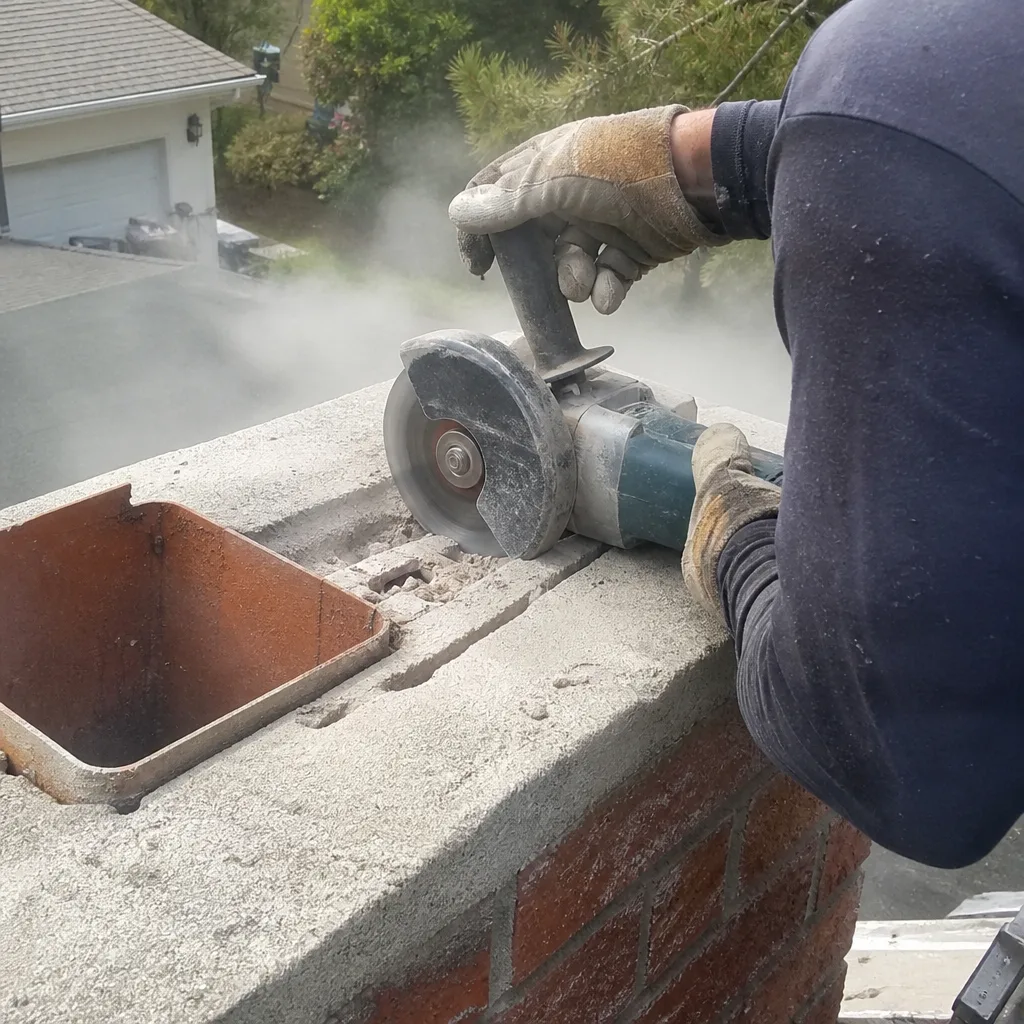
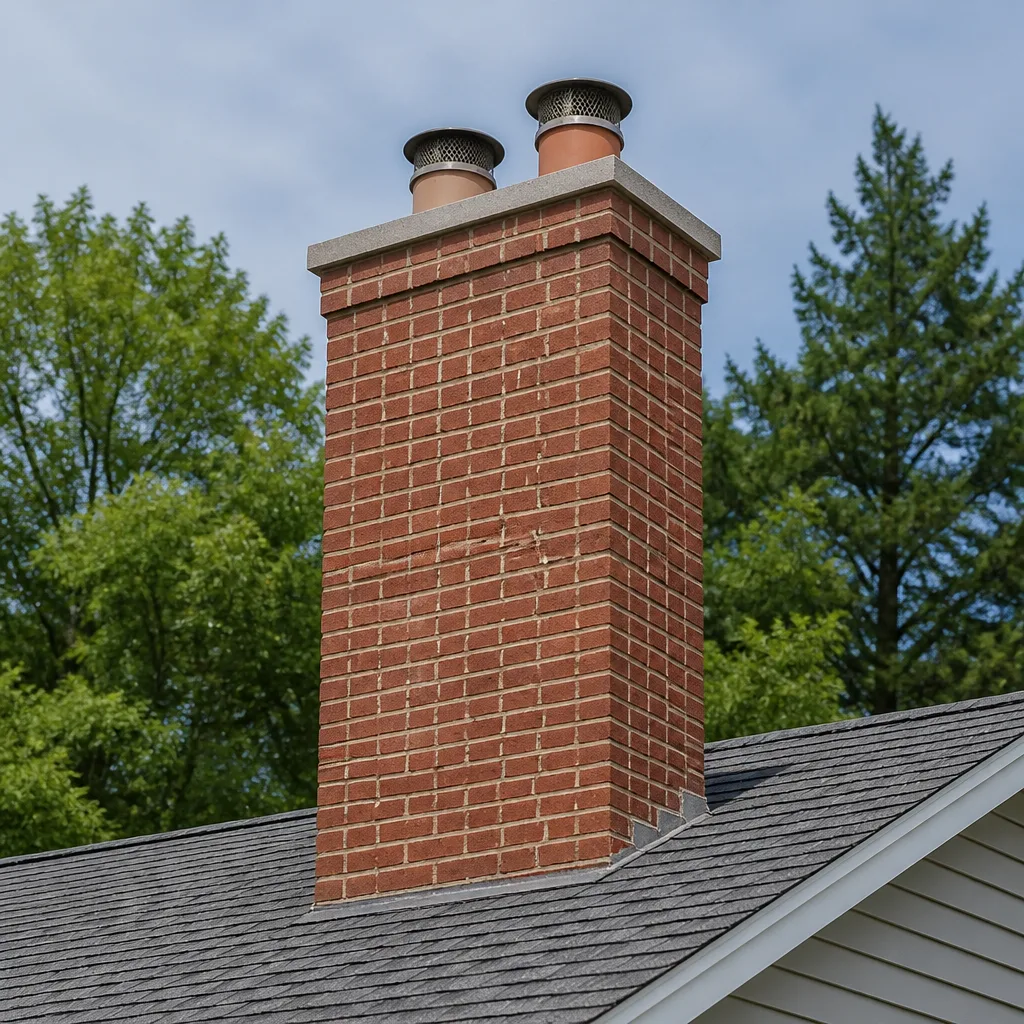
The crown is the concrete slab at the very top of the chimney, and its job is to shed water away from the masonry. Cracks, an uneven surface, or visible spalling (flaking pieces) mean the crown is failing. A failed crown lets water in from above, which drives efflorescence, rust, and eventually structural damage. This is one of the most common things we see on Huntington Beach roofs. Gelco and Famco crown components are made to handle this climate, and replacing a failing crown is far cheaper than repairing the masonry damage that follows.
Missing or Damaged Cap and Animal Guards
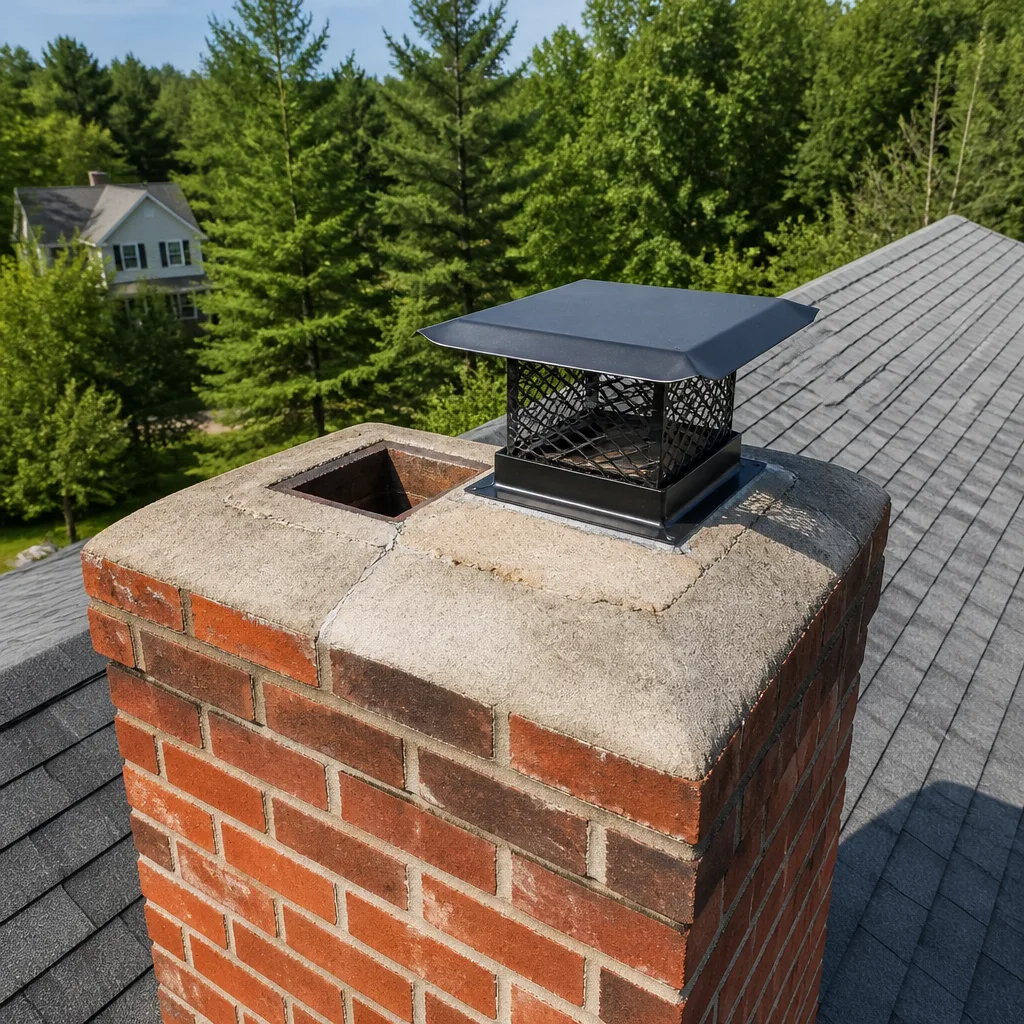
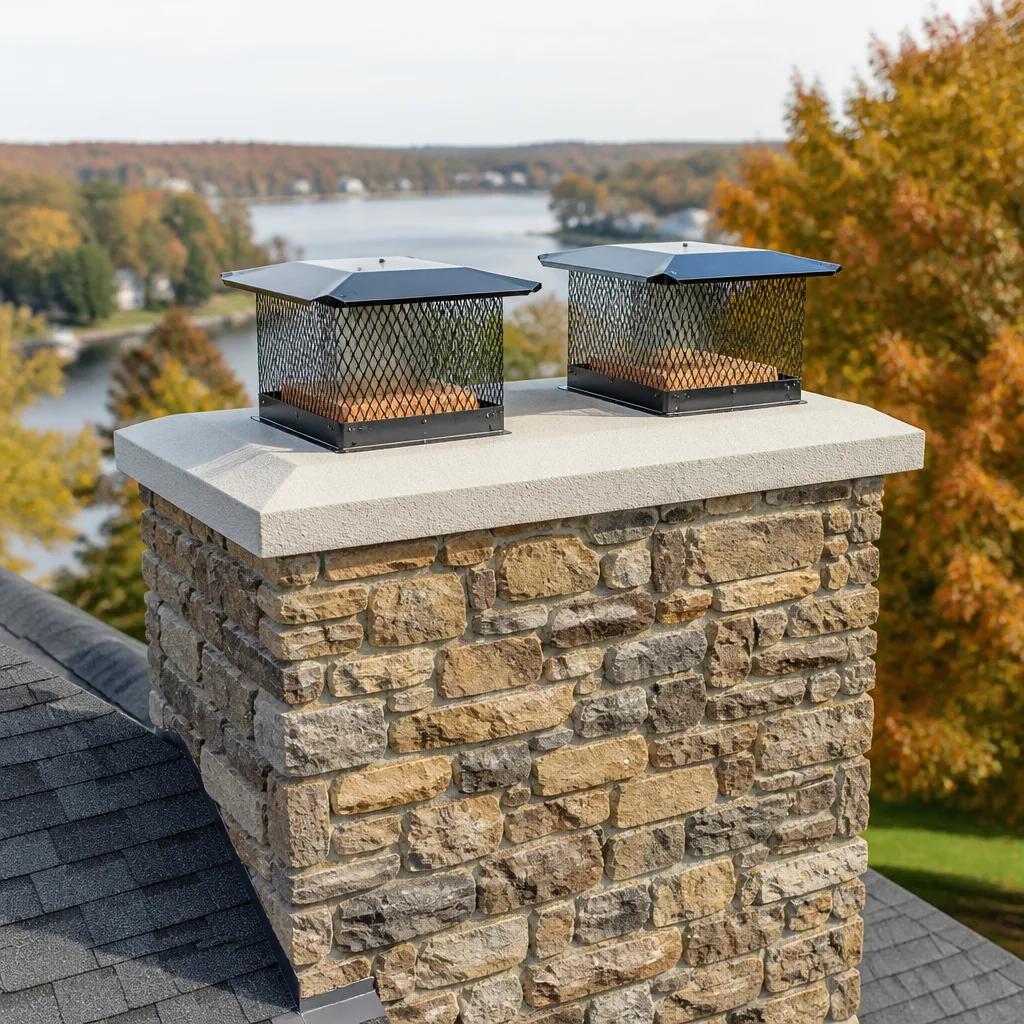
A chimney cap should cover the flue opening with a mesh screen on the sides. If yours is missing, dented, or has torn screening, you’re open to rain, birds, squirrels, and creosote flakes that can blow back into the house. It also means water can enter from directly above, which is the fastest way to invite the efflorescence and rust signs above. If your cap is failing, a replacement handled the same visit saves you a second appointment.
Interior Signs: Smells, Drafts, and What They Mean
Some of the most useful warning signs don’t require you to go outside at all. Inside the house, smell and draft tell you things the exterior can’t. When we perform a chimney sweep in Huntington Beach, these are the questions we hear first: “why does my fireplace smell when it’s not burning?” and “why does smoke come back into the room?” The answer depends on the specific smell and the specific draft problem.
Reading the Smells
Not all fireplace odors mean the same thing, and matching the smell to its cause saves a lot of guesswork:
- Strong smoky smell even when the fireplace is cold – usually creosote buildup in the flue, especially after warm weather. In Huntington Beach’s mild climate, the “off season” is shorter, so creosote doesn’t get as long to dry and settle before the next burn.
- Sour or musty smell – moisture in the chimney. This often pairs with efflorescence on the exterior and points to a water intrusion problem.
- Damp campfire or “wet ash” smell – often creosote plus water vapor, which is the combination that causes the most odor complaints in coastal homes.
- Sulfur or rotten-egg smell – uncommon and worth mentioning to a professional when you call. It can indicate gas issues if the home has gas appliances venting nearby.
- Animal smell (musky or ammonia-like) – something has moved in. A missing cap or torn screen is the usual reason, and this is common when caps fail.
- Chemical or unfamiliar odor – if it’s strong, unusual, and persistent, don’t burn a fire until the chimney is inspected.
Draft Problems
Smoke rolling into the room when you light a fire is the obvious draft problem. But there are milder versions of the same issue. A fire that’s hard to start, wood that won’t stay lit, a fire that “should” be building heat that isn’t, or a cold draft coming down the chimney when the fireplace is idle – all are signs that the flue is partially blocked, undersized for the fireplace opening, or leaking air through a failing joint. Any one of these is worth a call.
Visible Soot or Creosote Around the Firebox
If you can see soot streaks on the firebox walls or a black buildup near the damper, that’s normal in small amounts and a warning in larger amounts. It’s a signal that smoke is not moving cleanly up the flue, and it’s the first sign most homeowners can catch without a flashlight.
Stage 1, Stage 2, and Stage 3 Creosote: A Flashlight Check
Creosote is the tar-like byproduct of burning wood, and it’s the leading cause of chimney fires. It builds in three recognizable stages, and knowing which stage you’re looking at tells you whether you can wait or need to act now. Here’s how to identify each stage with a flashlight and, if you can see through the damper, from inside the firebox.
Stage 1: Flaky, Sooty, Easily Brushed
Stage 1 creosote looks like a thin, dusty layer of soot or black flakes on the flue walls. It’s the normal buildup from regular burning and is easily removed with a proper brush. A flashlight pointed up from the firebox will reveal grey-black film. This is the stage you want to catch, because a routine sweep handles it in minutes.
Stage 2: Crusty, Brittle, Hard to Scrape
Stage 2 creosote appears as a crusty layer of hard, brittle deposits. It may show vertical streaks, flaking pieces, and a thicker black coating than Stage 1. A flashlight will reveal a surface that looks almost like broken asphalt or dried tar. This is the stage where “waiting until next season” gets expensive, because Stage 2 deposits are harder to remove and accelerate the buildup of Stage 3.
Stage 3: Glazed, Puffy, or Tar-Like
Stage 3 creosote is the dangerous one. It looks like a thick, glazed, hard, or puffy coating on the flue walls – sometimes with a shiny, tar-like appearance, and sometimes with a bubbly surface. It ignites easily and burns very hot. If you see or suspect Stage 3, stop lighting fires and have the chimney inspected before you burn again. This is not a wait-and-see situation. Here’s the priority order:
- Stage 1 – schedule a sweep before the burning season gets heavy.
- Stage 2 – schedule a sweep within the next couple of weeks.
- Stage 3 – do not light another fire until a professional inspects the chimney.
A professional sweep can remove Stage 1 and Stage 2 with the right tools. Stage 3 sometimes needs chemical treatment or rotary cleaning, and if it’s severe enough, a liner evaluation. HeatShield ceramic relining can restore a flue where glazed creosote has caused heat damage to the clay liner, but that’s a repair call, not a cleaning call.
Structural Warning Signs Around the Crown, Flashing, and Mortar
Structural problems announce themselves from outside the house, and most Huntington Beach homeowners have the perfect vantage point – a yard, a sidewalk, or a driveway view of the chimney. The trick is knowing what you’re looking at. Here’s what we look for when we assess chimney structure, in order of what’s easiest to see.
Crown Condition
The crown sits on top of the masonry and is supposed to overhang with a slight slope so water runs off rather than pooling. Signs of a failing crown:
- Cracks that run across the top surface
- Visible spalling or flaking concrete
- Water pooling on the crown rather than running off
- Original crown that sits flat instead of sloped
- Rust stains below the crown line, which suggest water is getting behind the masonry
Flashing and the Roof Joint
Flashing is the metal seal between the chimney and the roof. When flashing fails, water gets into the roof structure, and the early sign is a stain on the attic ceiling or a damp patch on the roof sheathing near the chimney. From the ground, look for lifted metal edges, dried-out sealant, or flashing that has visibly come away from the chimney wall. This is one of the more commonly ignored signs, because the visible damage is elsewhere in the house. We’re not a roofing contractor; if the flashing failure has damaged the roof, we’ll tell you what we see and let you know the appropriate next step. Our focus is the chimney side of the joint.
Mortar Joints and Brick Face
Mortar should look solid, uniform, and slightly recessed between the bricks. Warning signs:
- Crumbling or powdery mortar (called spalling)
- Visible gaps where mortar has receded
- Discolored or dyed mortar near the top of the chimney
- White staining (efflorescence) concentrated at joints
- Loose or bowed bricks
- A chimney that leans noticeably
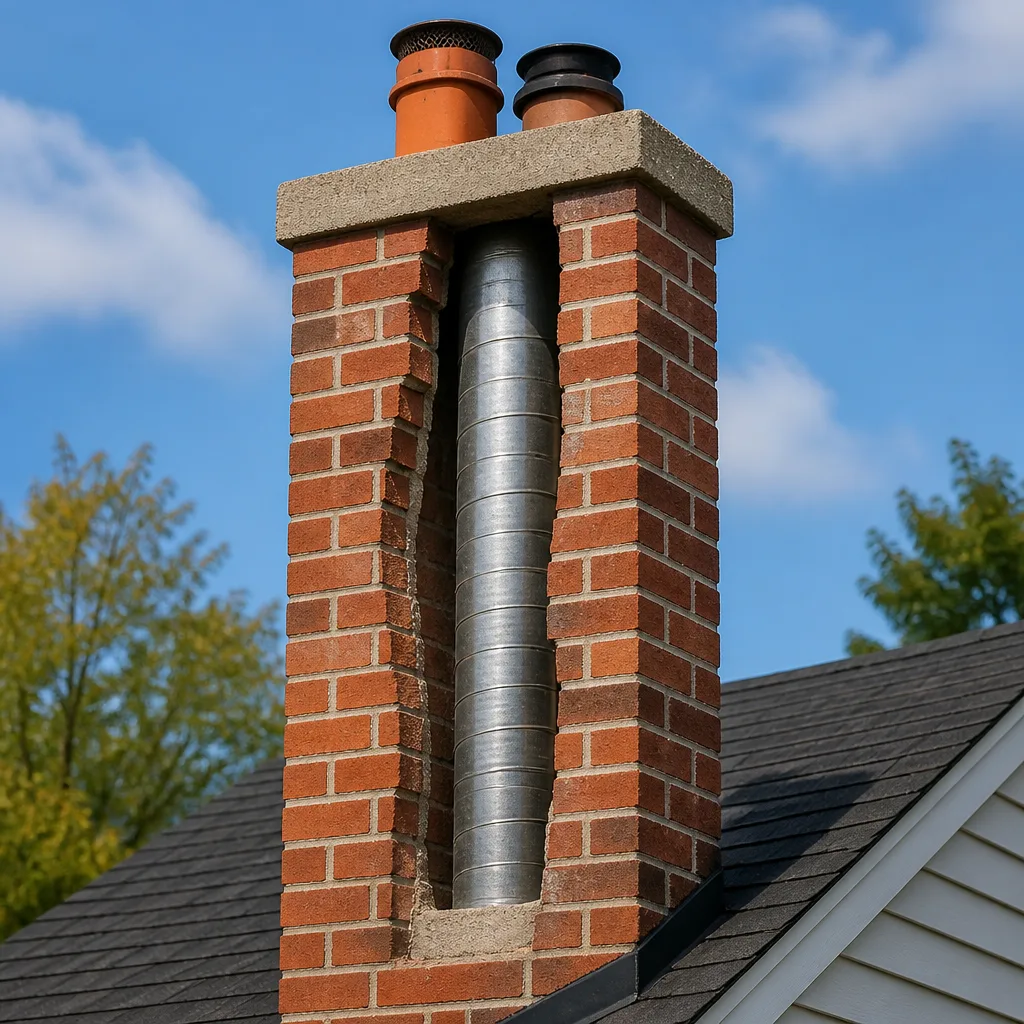
Some of these are cosmetic and can wait. Others – leaning, bowing, or visible gaps – are signs that the whole chimney should be evaluated soon, because masonry that’s losing its joint integrity can eventually move. This is one of the cases where an inspection is worth the appointment even when the fireplace is working fine.
Cap Damage and Chimney Top Assembly
The cap, the crown, and the flue tile are three separate components that have to work together. Damage to any one of them means the others are doing more work than they should. If you’ve seen a cap that’s bent, missing mesh, or rusted through, plan on addressing it in the same visit as the crown – it’s usually the same job and the same company can handle both.
The Triage Framework: Schedule Soon vs. Do Not Light a Fire
Not all warning signs demand immediate action. Reading them correctly means knowing which ones mean “schedule in the next few weeks” and which mean “stop using the fireplace today.” Here’s how we think about triage when a Huntington Beach homeowner describes their symptoms.
Do Not Light a Fire Until Inspected
- Stage 3 creosote visible in the flue – the fire risk is real and immediate.
- Strong chemical or unusual smell with no explanation – identify it before burning.
- Visible smoke rollback into the room when the fireplace was previously drawing fine – a sudden change usually means a new blockage.
- Chimney fire in the past – even a small one stresses the flue tile, and it needs to be evaluated before the next fire.
- Visible cracks in the firebox or flue tile – this is a pathway for fire and carbon monoxide.
- Dead animal or significant nest in the flue – clear it before lighting anything.
Schedule a Sweep or Inspection Soon
- Stage 1 or Stage 2 creosote
- Mild draft problems
- A creosote or soot smell when the fireplace is cold
- Efflorescence on the exterior
- Rust on the cap or damper
- Crown cracks or minor spalling
- Missing or damaged cap
- Mortar issues that look cosmetic rather than structural
Monitor and Recheck Next Season
- Light soot near the firebox
- Minor exterior discoloration with no other symptoms
- A slightly hard-to-start fire during humid weather
- Cosmetic rust on a cap fastening
The “monitor” list is short on purpose. Most warning signs we see in Huntington Beach deserve at least a sweep, and the ones in the “do not light” list deserve a call today. If you’re not sure which category your symptom belongs to, describe it over the phone and we’ll help you sort it out before you schedule.
What a Professional Chimney Sweep Actually Checks
The word “sweep” undersells what a professional visit involves. A proper sweep isn’t just running a brush up the flue – it’s a full assessment of the chimney system from the firebox to the cap. Here’s what we check, in order, when we service a Huntington Beach chimney.
- Exterior walkaround – crown, cap, flashing, masonry, efflorescence, rust, and any visible structural movement.
- Firebox and damper inspection – firebrick condition, damper operation and seal, soot patterns, and visible creosote around the throat.
- Flue cleaning – proper brush or rotary cleaning, stage-specific tools, and careful work around the flue tile joints.
- Camera inspection of the flue – this is where we find things a visual check can’t. Camera work is what turns “the sweep cleaned it” into “we know what the inside of your flue looks like.”
- Cap and chase cover check – including animal guards and mesh condition.
- Draft test – verifying the flue is pulling properly and the fireplace isn’t fighting a blockage or drawing down a cold chimney.
- Written report and quote for any repairs – if we find a problem, we can quote it on the spot. Cap and crown work is handled in-house using Gelco and Famco components. Liner issues can be addressed with DuraFlex or HeatShield systems without a separate referral.
That last point is the difference between a sweep and a full chimney company. When the sweep opens the flue and finds something, the same company should be able to do the repair. A sweep that finds a problem should be able to fix it. That’s why we install and service the full range of chimney components – a chimney cap & crown, a fireplace repair, and flue relining all get handled under one roof.
How Often Should a Huntington Beach Chimney Be Swept?
Once a year is the general standard, and it applies here too. In Huntington Beach’s mild climate, the burning season is longer than in colder markets – some homeowners burn well into the shoulder seasons – which means more creosote hours and less time between sweeps. Homes that burn frequently, or that burn wood with higher moisture content, should consider a mid-season check as well. If you’re ever unsure whether your chimney needs a sweep, a quick look with a flashlight at the smoke chamber tells you most of what you need to know.
See the difference
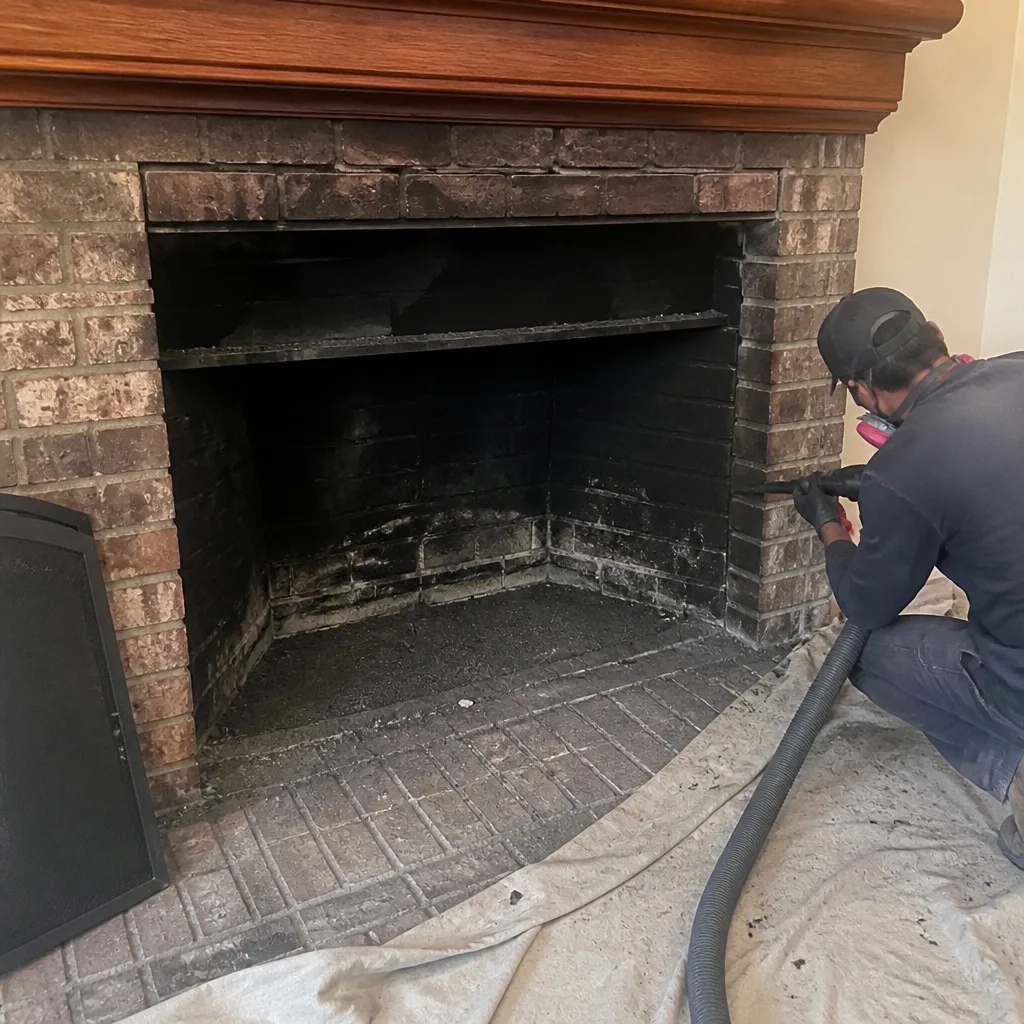 Before
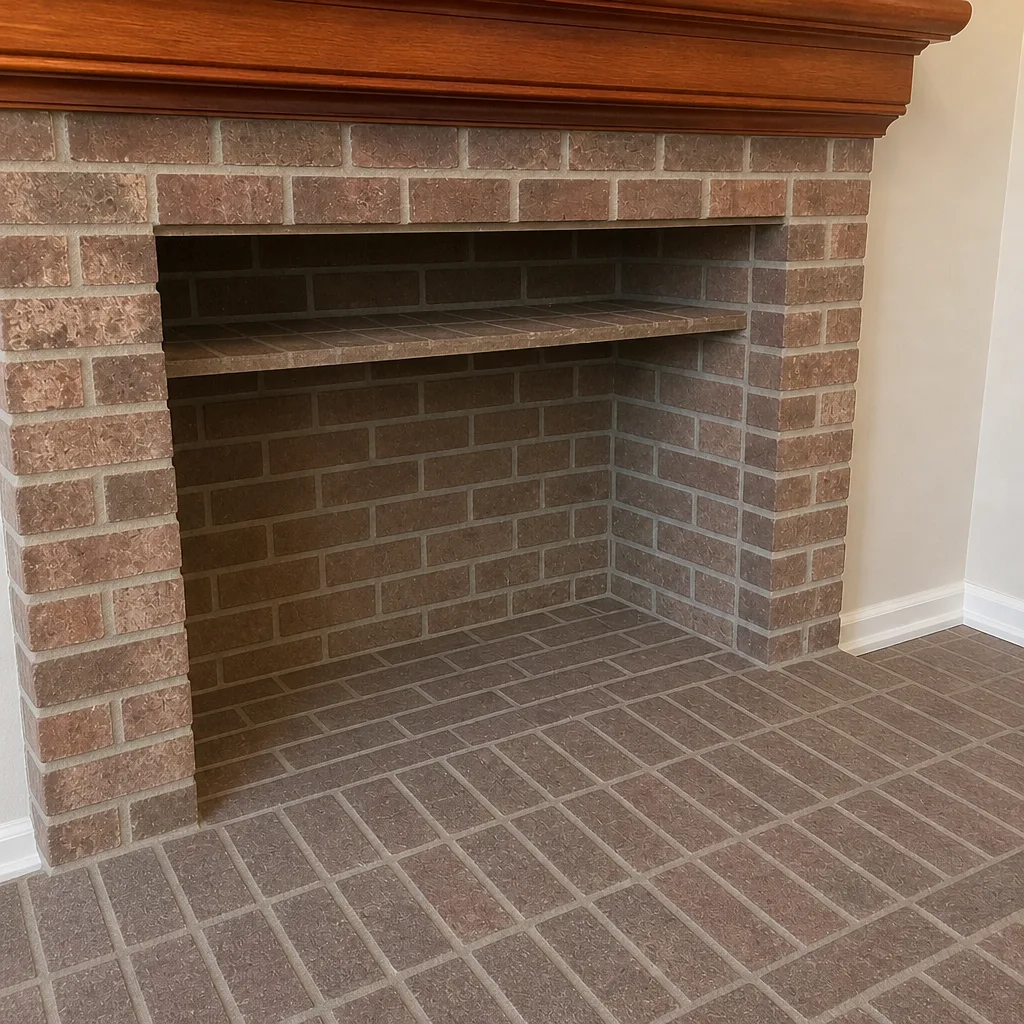 After
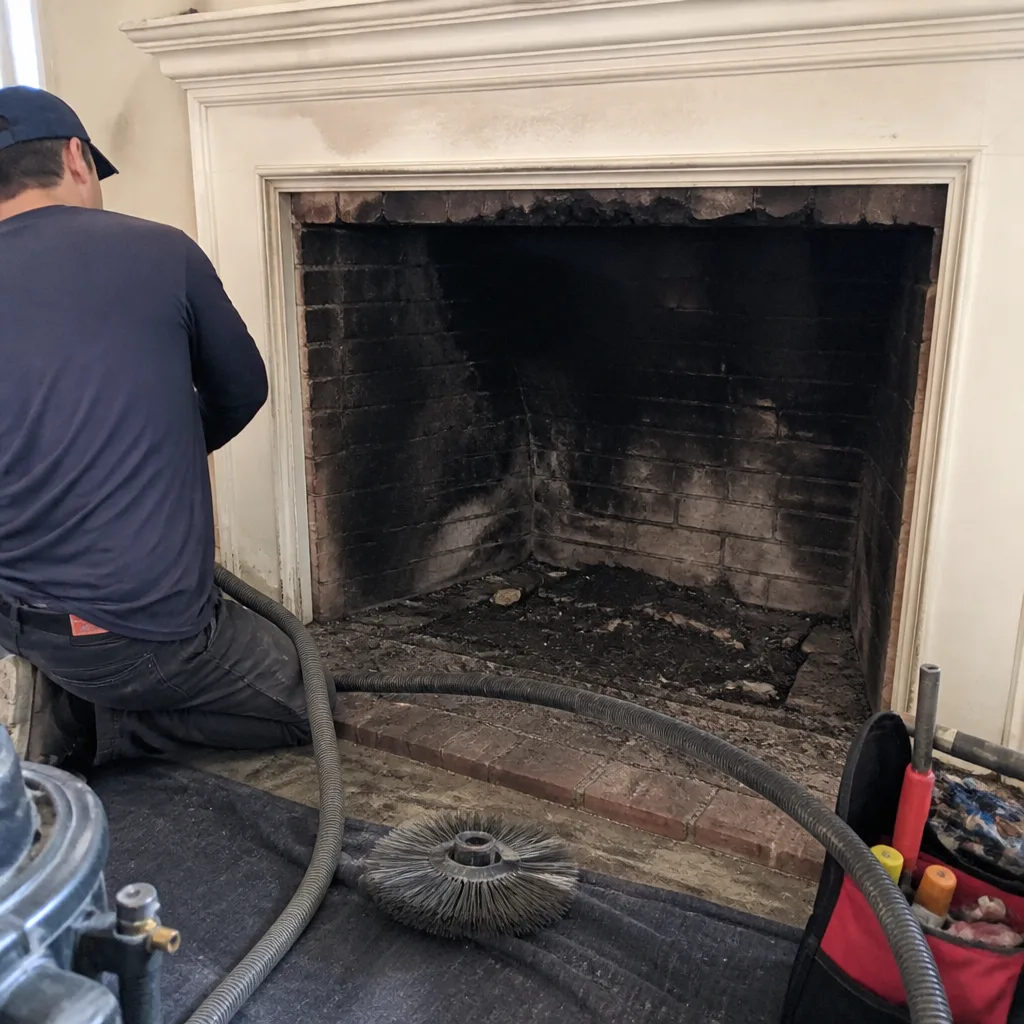 Before
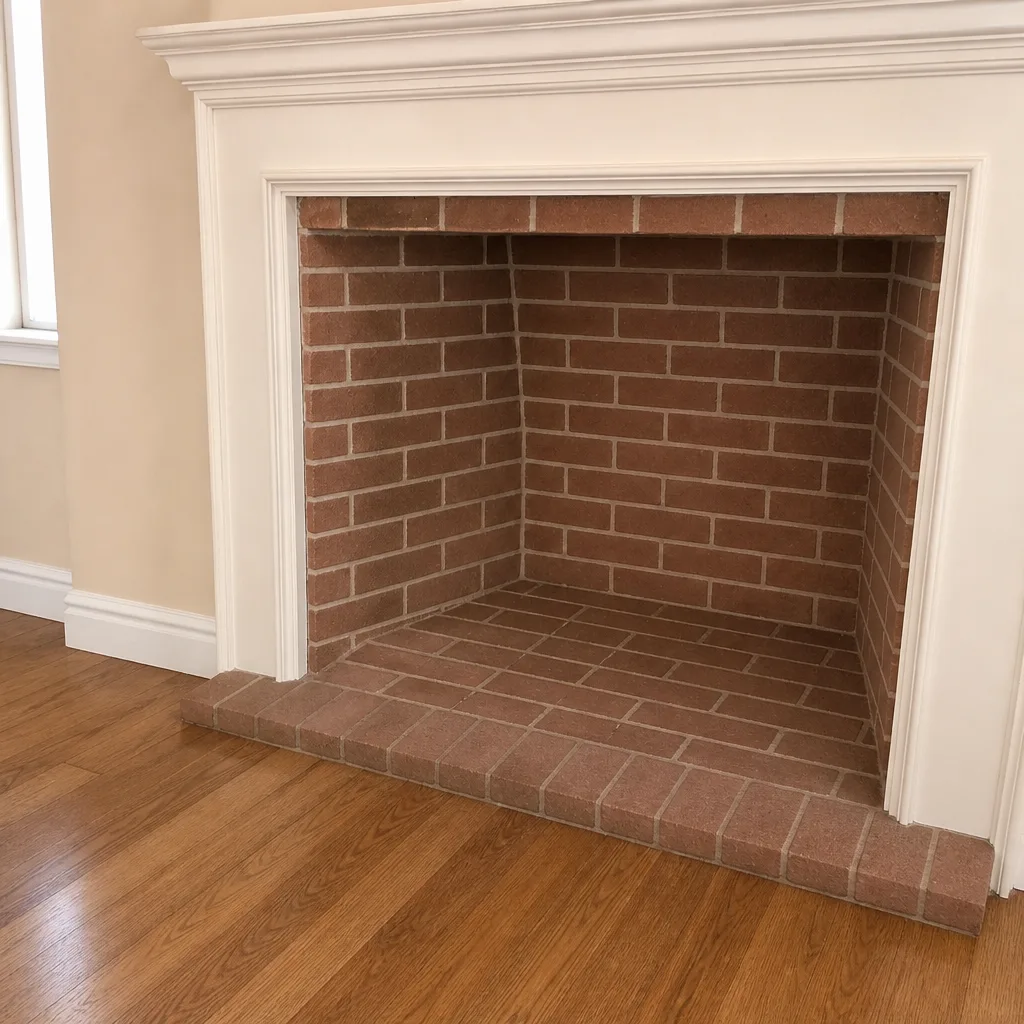 After
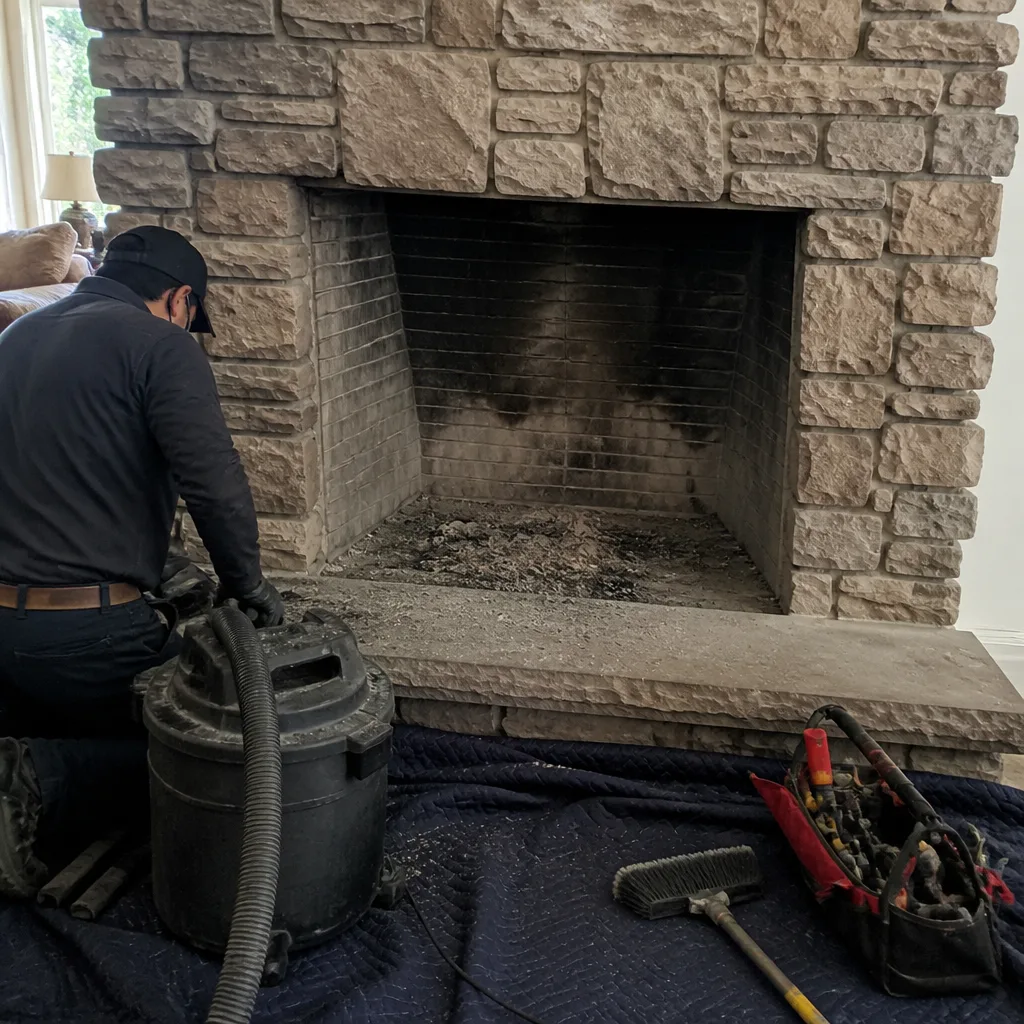 Before
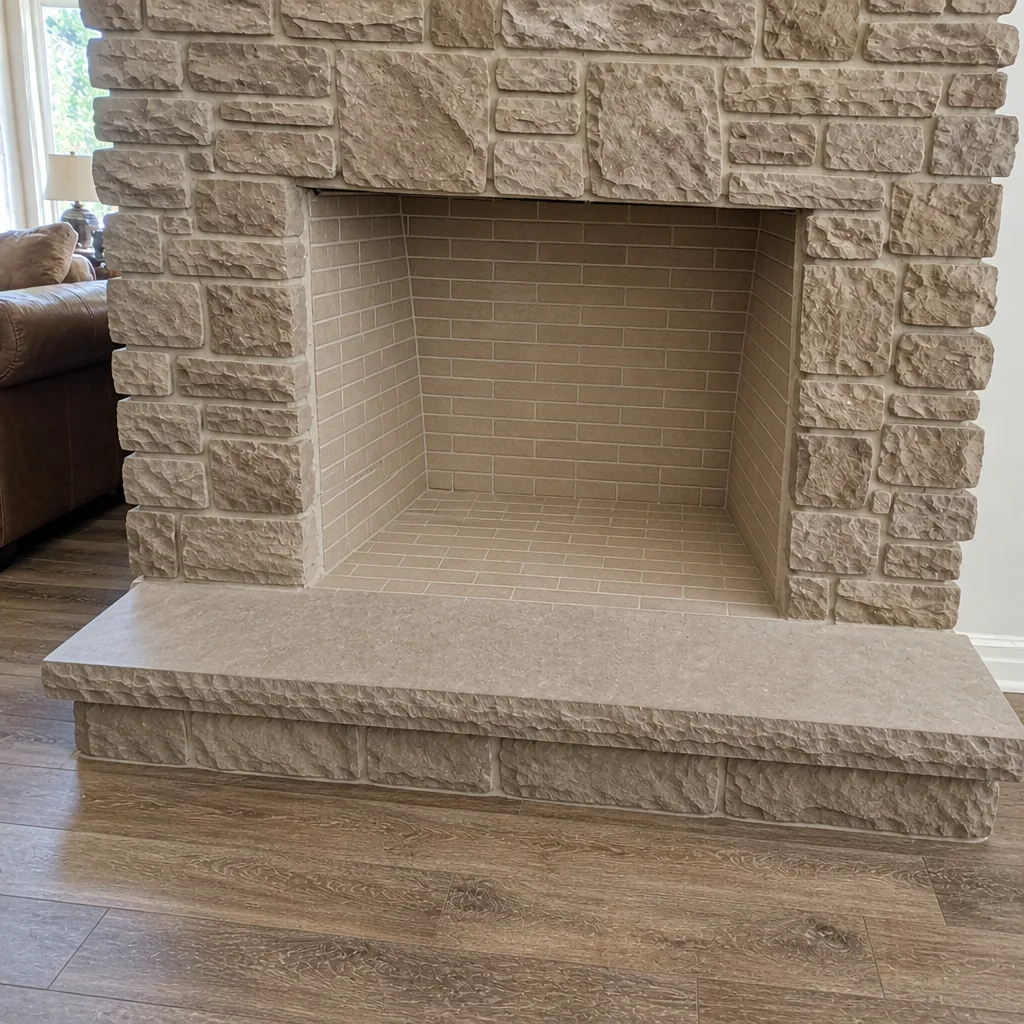 After
Common Mistakes to Avoid
We see the same handful of mistakes over and over. Each of these is easy to make and easy to avoid once you know it’s a mistake.
- Treating efflorescence as cosmetic. The white staining is a symptom of water moving through your masonry, not a stain to wash off. Hosing it down hides the evidence without addressing the cause. Water keeps getting in, and the repair gets more expensive.
- Burning “seasoned” wood that isn’t actually dry. Wood with high moisture content is the fastest way to build Stage 2 and Stage 3 creosote, especially in a coastal climate where wood absorbs ambient moisture. Split wood, stack it with airflow, and cover the top but not the sides.
- Ignoring a rusty cap until it fails completely. Rust on a cap is a trailing indicator – it means water has already been sitting on the top of the chimney for a while. Replacing a cap when it first shows rust is cheap; replacing it after it drops a chunk into the flue is not.
- Assuming a smoke smell means it’s fine because there’s no fire. A cold fireplace that smells strongly like smoke usually has significant creosote buildup that’s off-gassing in the sun. In Huntington Beach, this often shows up on warm afternoons – a sign you shouldn’t ignore.
- Assuming the home inspection covered the chimney. Most standard home inspections are visual and from the ground level. They don’t include a camera inspection of the flue or a proper draft test. A dedicated chimney inspection is a different animal, and it’s what a proper sweep comes with.
- Skipping the sweep because the fireplace “looks clean.” Creosote builds on the inside of the flue, which you can’t see without a flashlight or a camera. “Looks clean” from the firebox side is not the same as “is clean” in the flue. This is the single most common reason minor issues become serious.
- Lighting the first fire of the season without checking anything. The first fire after a dormant season is the riskiest, because creosote has had time to dry and brittle and the damper hasn’t been tested in months. A quick pre-season look at the cap, the damper, and the flue saves the surprise of discovering a problem with the first burn.
When to Call a Professional
Some warning signs you can address with a scheduled sweep. Some need a call today. The dividing line is simple: if smoke, fire risk, or carbon monoxide is involved, it’s a call-now situation. If it’s moisture, odor, or draft, it’s a schedule-soon situation. The signs that need professional attention without delay are Stage 3 creosote, visible firebox or flue cracks, a past chimney fire, sudden smoke rollback, dead animals in the flue, or strong unusual odors. The signs that need a scheduled visit are efflorescence, rust on the cap or damper, crown cracks, mortar issues, and any creosote buildup greater than light Stage 1. There’s also a category of “I’m not sure” – and that’s reason enough to make a call. Chimney Sweep Huntington Beach offers free estimates in Huntington Beach – call (855) 658-5323. We answer 24/7. Fast dispatch from 7am to 7pm, Sunday through Friday.
Frequently Asked Questions
The earliest warning signs are a smoky smell when the fireplace is cold, light soot buildup around the damper, and a slow-to-start fire. On the exterior, white efflorescence staining and rust on the cap often show up first, especially in Huntington Beach’s coastal environment. Any one of these is worth a call – call (855) 658-5323 for an exact quote, and estimates are free.
Yes. White, powdery staining on the outside of a chimney is efflorescence, and it means water is moving through the masonry and pulling minerals to the surface. It’s not cosmetic, and it’s not caused by weather alone. In Huntington Beach, salt air accelerates the process. Call (855) 658-5323 to schedule an inspection that identifies where the water is coming from.
Once a year is the standard, and it’s a reasonable baseline for Huntington Beach, where the burning season is longer than in colder markets. Homes that burn often or use wood with high moisture content should plan for a mid-season check as well. Call (855) 658-5323 to book a sweep – estimates are free.
Stage 3 creosote looks glazed, tar-like, or puffy on the flue walls, sometimes with a shiny or bubbled surface. It’s hard, dark, and dangerous – it ignites easily and burns very hot. If you see or suspect Stage 3 creosote, do not light another fire until the chimney is inspected. Call (855) 658-5323 for an exact quote on cleaning or repair.
Basic brushing of a flue is possible for a confident homeowner, but the parts that matter – the crown, the flashing joint, the flue tile condition, the damper seal – need proper inspection and often a camera to see. High areas and masonry work should be handled by a trained professional. If you’re going to clean your own, plan on a professional inspection at least once a year to catch what the brush can’t see. Call (855) 658-5323 for that inspection.
Prices vary with the condition of the chimney, whether the sweep finds anything that needs attention, and the extent of the inspection you want. The written estimate sets the final price, and we don’t move forward with anything before you’ve agreed to it. Call (855) 658-5323 for an exact quote – estimates are free.
The Bottom Line
The warning signs a chimney gives are quiet, but they’re clear once you know what you’re looking at. White efflorescence is water, rust is corrosion, cold-fireplace smell is creosote, and glazed creosote is a stop sign. In Huntington Beach, salt air and a long burning season mean these signs appear faster than they do inland, which makes early action more valuable than it is in colder markets. Match the sign to its cause, use the triage framework to sort urgent from routine, and get a professional look at anything that concerns you. A sweep that finds a problem should be able to fix it – and that’s how we handle the full chimney system, from inspection to repair. Call (855) 658-5323 for a free estimate.
Written by the team at Chimney Sweep Huntington Beach.